The word "voluntary" causes confusion because it can mean three things: the employee opts in, the employee pays all or part of the cost, or the employer isn't legally required to offer it. Those are separate ideas, and mixing them up leads to enrollment mistakes.
Understanding is also thin. EBRI's 2026 research found only 40% of employees report high understanding of critical illness coverage. This guide covers how voluntary benefits work, common examples, who pays, why employers offer them, and how to communicate their value.
Key Takeaways
- Voluntary benefits let employees match coverage to their own health, family, and financial needs.
- Employers may fully fund, share, or simply facilitate costs through payroll deductions.
- Options range from supplemental insurance to legal plans, pet insurance, and student loan help.
- A benefit only has value when employees understand its cost, limits, and what happens if they leave.
What Are Voluntary Benefits?
Voluntary benefits are optional offerings made available through an employer. The employer picks the menu. Employees decide whether to enroll. The employer does not necessarily pay for them.
Insurers use the term in a similar way. Guardian describes optional supplemental group life as "voluntary" (meaning employee-paid), while employers can pay some, all, or none of group life costs.
Voluntary Benefits vs. Mandatory Benefits
Mandatory obligations come from law and vary by employer size and state. Typical examples:
- Employer Social Security and Medicare taxes
- Federal and state unemployment taxes
- Workers' compensation, which varies by state
- FMLA leave for covered employers (generally 50+ employees)
- ACA coverage offers for applicable large employers (50+ full-time employees, including equivalents)
- State disability programs in places like California, New York, New Jersey, Rhode Island, and Hawaii
"Voluntary" and "employer-paid" aren't opposites. An employee can voluntarily enroll in a fully employer-paid benefit, while another voluntary benefit may be entirely employee-paid. Check which rules apply to your business with counsel.
Who Pays for Voluntary Benefits?
Three models are common: employee-paid, employer-paid, and shared. Which model applies depends on the plan, insurer, and employer policy.
Payroll deductions and group rates can make coverage easier to afford. But tax treatment isn't automatic:
- Section 125 cafeteria plans allow pre-tax deductions for qualifying benefits, but not every voluntary benefit qualifies.
- Disability benefits from premiums paid entirely with after-tax dollars are generally not taxable income. Pre-tax premiums generally make the benefits taxable.
- Group-term life above $50,000 creates imputed income on the coverage cost.

Confirm details in plan documents. Also, employee-paid doesn't mean zero employer work: you still handle administration, payroll, and compliance.
Common Types of Voluntary Benefits
Voluntary benefits go well beyond insurance. It helps to sort them by the problem they solve.
Health and Financial Protection Benefits
- Dental and vision: cover routine care a medical plan may not fully address. Limits, networks, and exclusions vary.
- Life insurance: protects a family's finances if an employee dies.
- Short- and long-term disability: replace part of income during illness or injury. This isn't medical insurance.
- Accident, critical illness, and hospital indemnity: pay set amounts after qualifying events. They supplement comprehensive health insurance and don't replace it.
Access varies widely. BLS data puts private-industry access at 44% for dental, 59% for life, 44% for short-term disability, and 37% for long-term disability. These figures cover access to all such plans, not just voluntary ones.

Separate SHRM 2025 data tracks employer offer rates:
| Benefit | Employer-offered (SHRM 2025) |
|---|---|
| Dental | 99% |
| Vision | 96% |
| Critical illness | 53% |
| Hospital indemnity | 40% |
| Pet insurance | 22% |
Financial, Personal, and Lifestyle Benefits
- Retirement contributions and financial counseling
- Student loan assistance (up to $5,250 combined tax-free educational assistance in 2026 under Section 127)
- Legal plans and identity theft protection
- Telehealth and caregiving resources
- Pet insurance and lifestyle discounts
- Flexible spending accounts: pre-tax deductions for eligible expenses
In LIMRA-EY's 2025 study, 31% of workers were very or extremely interested in identity theft protection, 29% in financial wellness, and 28% in telemedicine. Availability and tax treatment differ by employer and provider.
Why Voluntary Benefits Matter
Choice. A 28-year-old with student loans and a 45-year-old with kids need different things. Voluntary options let each person skip what they don't need.
Recruiting and retention. Employers believe in benefits: 84% say they're necessary to attract key talent, per LIMRA-EY. That figure reflects employer perception more than proven hiring impact.
Aflac's 2025 survey found about one-quarter of employees say better benefits could keep them in their job. Treat that as stated intent, and avoid promising lower turnover.
Affordability. Many options need little direct premium spending. Still plan for administration, communication, vendor coordination, and compliance costs.
The catch. More benefits don't create more value if employees can't afford them, can't understand them, or struggle to enroll. EBRI found 86% of employees spend four hours or less reviewing benefits materials.
How Employers Can Choose and Communicate Voluntary Benefits
Assess Workforce Needs
- Survey employees and track enrollment behavior
- Look at life-stage and demographic patterns
- Review exit interview themes and recurring questions
Don't assume one workforce has uniform needs. Pick a manageable set that complements existing medical, retirement, and leave programs, rather than copying what other companies offer.
Evaluate Cost, Eligibility, and Administration
Compare these before choosing a plan:
- Employee and employer costs
- Participation minimums (carrier-specific; some require 5 eligible employees and 20% or 5 enrolled for voluntary life)
- Waiting periods, underwriting, and exclusions
- Portability and conversion
- Claims process and payroll integration
Define eligibility classes clearly. Section 125 includes nondiscrimination rules, including a key-employee test that applies when key employees receive more than 25% of nontaxable benefits. If you want different benefits for different groups, have legal or benefits counsel review it first.
Communicate Total Value Clearly
For each benefit, explain in plain language:
- What it costs the employee and what the employer contributes
- Coverage amount and limitations
- Enrollment deadline and payroll impact
- What happens when employment ends

Do this at onboarding and open enrollment, and update materials whenever plans change.
Employees often undervalue what they don't see. Paychecks show only about 50% to 65% of total compensation, and a MetLife study found employees who receive benefits communications are twice as loyal.
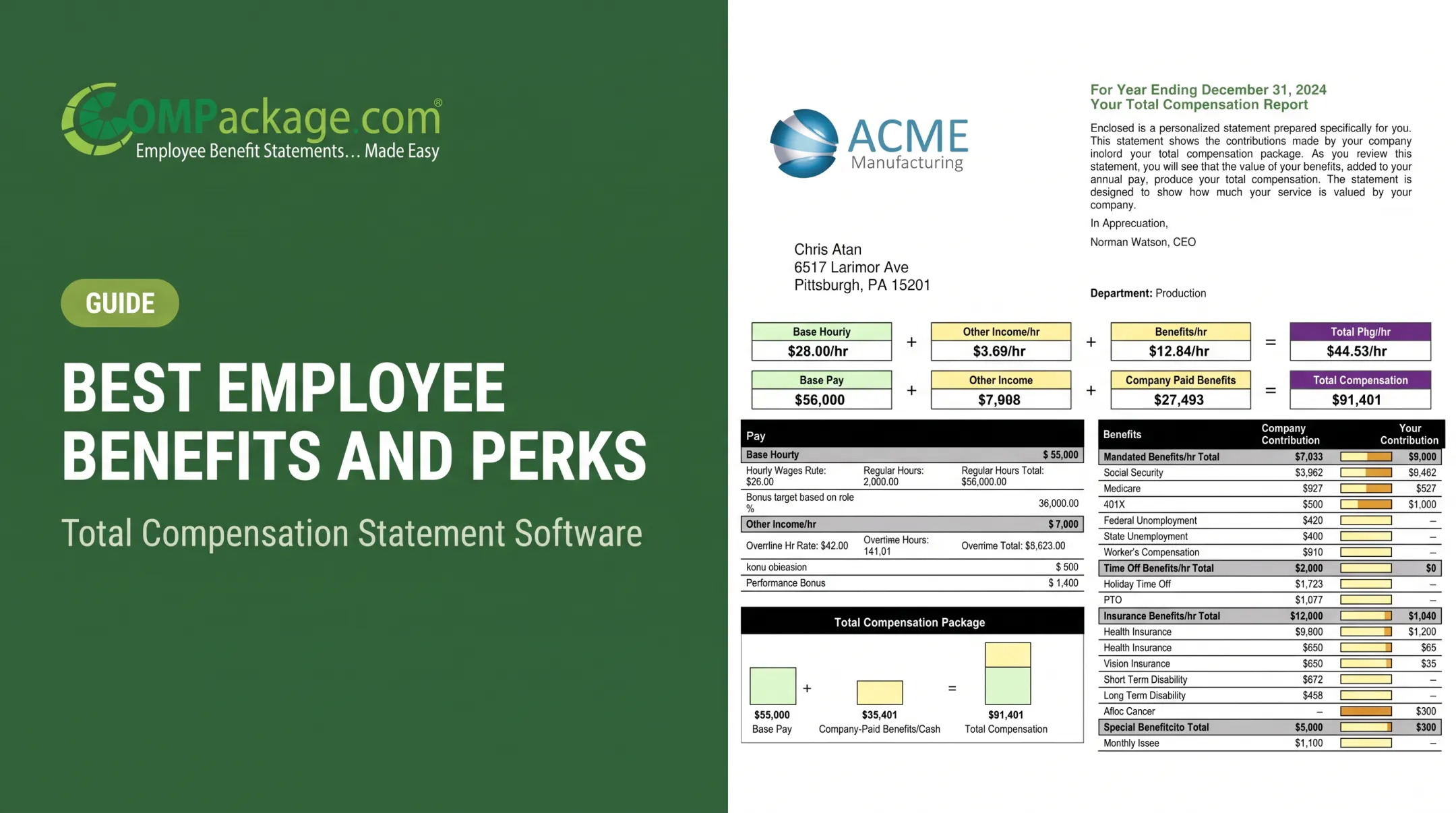
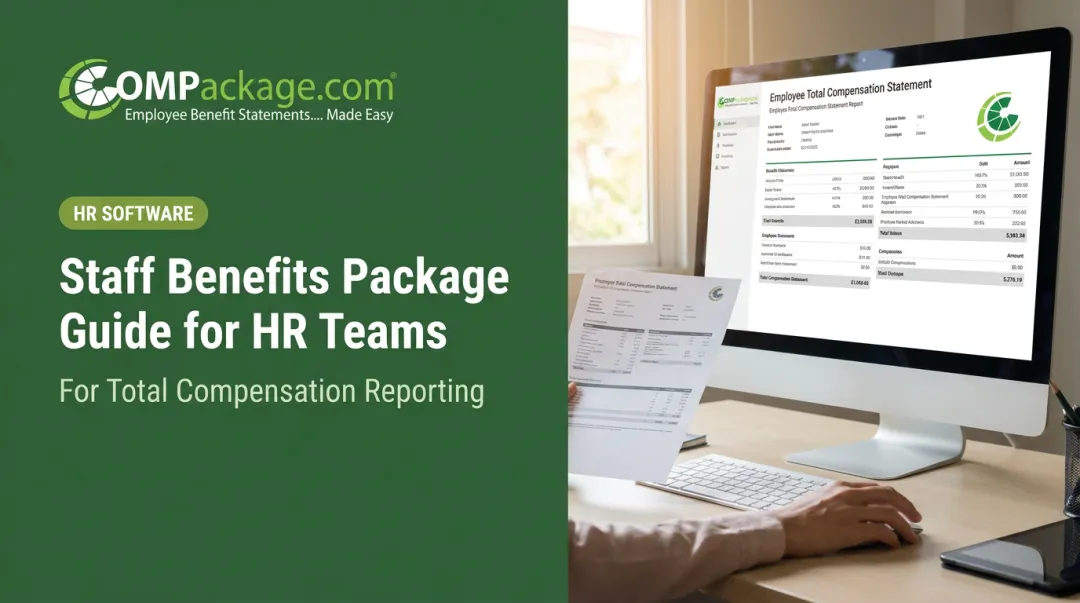
A total compensation statement tool such as COMPackage lets HR show each employee the benefits and compensation elements that apply to them, in one place. The focus is visibility, not insurance advice or plan administration.
Frequently Asked Questions
Who pays the cost of voluntary benefits?
It depends on the plan. Employees may pay all of it, employers may pay all of it, or the two may share. Payroll deduction rules vary by plan.
What happens to my voluntary life insurance if I quit my job?
Coverage may end, be portable, or be convertible to an individual policy. One carrier example sets a 31-day window, but deadlines vary, so check your plan certificate.
How long is voluntary life insurance good for?
It depends on the policy, your employment status, age limits, and portability or conversion terms. One state plan reduces coverage to 40% at age 70, but that's plan-specific.
Is voluntary life insurance a good idea?
It can help employees who need extra financial protection. Compare coverage, premiums, exclusions, beneficiaries, and alternatives first.
Is voluntary short-term disability insurance worth it?
It can replace part of your income during a qualifying temporary disability. Compare the benefit amount, waiting period, duration, exclusions, and any paid leave you already have.
What's the difference between voluntary and mandatory?
Voluntary benefits are optional for employees and generally not required as a specific offering. Mandatory obligations depend on US laws and the employer's circumstances.