Introduction
Most managers treat compensation adjustment statements as administrative paperwork — write the number, note the date, send it along. That approach is a mistake.
How you frame a compensation change directly affects whether an employee feels recognized or overlooked, valued or confused. Gallup research shows that employees who don't feel adequately recognized are twice as likely to say they'll quit within the next year. A well-written statement can reinforce that recognition. A vague or incomplete one can undermine even a generous adjustment.
This guide walks through what a compensation adjustment statement is, when to issue one, what to include, common mistakes to avoid, and a practical template you can adapt right away.
Key Takeaways
- A compensation adjustment statement formally documents any change to an employee's compensation — base salary, bonuses, benefits, or all three
- Every statement must include current compensation, the adjustment details, the effective date, the documented reason, and next steps
- Specific justifications outperform vague praise — employees respond to named achievements, not generic recognition
- Showing total compensation — not just the base pay change — gives employees a fuller picture of what they actually earn
- Common failures include missing effective dates, unconfirmed figures, and generic templated language
What Is a Compensation Adjustment Statement (and When to Issue One)
A compensation adjustment statement is a formal written document from an employer to an employee communicating a change in any component of their compensation package. That includes base salary, bonus structure, benefits, cost-of-living adjustments (COLA), or equity.
It's broader than a salary increase letter, which typically addresses only base pay. A compensation adjustment statement covers the full picture — and that scope matters. According to BLS 2026 Q1 data, benefits account for 30.1% of total private-industry compensation costs, meaning base pay alone tells less than half the story.
When to Issue One
These situations warrant a formal compensation adjustment statement:
- Annual performance reviews with base pay or bonus changes
- Promotions with title changes, expanded responsibilities, and corresponding pay adjustments
- Market realignment when compensation is adjusted to match competitive benchmarks
- Cost-of-living increases tied to inflation or regional adjustments
- Role expansions where scope increases without a formal title change
- Benefits restructuring affecting the overall value of the package
When NOT to Issue One
Skip the formal statement for minor one-time bonuses, informal spot rewards, or pre-offer salary negotiations (an offer letter covers those). Reserve the formal document for changes that affect ongoing compensation — those are the situations where documentation protects both the employee and the employer.
How to Write a Compensation Adjustment Statement: Step-by-Step
Step 1: Gather All Compensation Data First
Never draft a statement without confirmed figures in front of you. Pull:
- Current base pay and total compensation (including benefits, PTO value, bonuses, employer insurance contributions)
- New figures post-adjustment
- The exact effective date and the first paycheck it will reflect
- Budget approval documentation for the adjustment
HR or payroll should verify all numbers before you write a single sentence. A wrong salary figure or incorrect date doesn't just look careless. It can create legal complications around wage agreements in many jurisdictions.
Step 2: Match Tone to the Adjustment Type
Not every adjustment calls for the same register:
| Adjustment Type | Appropriate Tone |
|---|---|
| Performance-based raise | Warm, personal, achievement-focused |
| COLA or market adjustment | Matter-of-fact, policy-grounded |
| Promotion | Celebratory but professional |
| Benefits restructuring | Informative, neutral, explanatory |
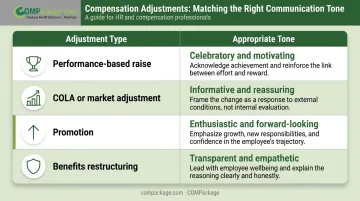
Mixing these tones — writing a generic "great work" opening for what is actually a market correction — creates confusion and feels dishonest.
Step 3: Draft the Core Components in Order
A logical flow for the document:
- Personalized opening acknowledging the specific employee
- Current compensation details (be explicit)
- The adjustment amount, percentage, and new total
- The reason tied to a specific achievement or policy
- Any changes to role, title, or responsibilities
- Closing with gratitude and a clear contact for questions
Step 4: Review for Legal and Policy Compliance
Before delivery, run through each of these compliance checkpoints:
- Company compensation policy and approved pay bands
- Applicable pay equity or pay transparency laws in the employee's jurisdiction (Colorado, New York, Illinois, Washington, and California all have specific requirements)
- EEOC recordkeeping standards, which require wage-differential records to be retained for at least two years
A second review by HR or a senior manager before delivery catches errors that slip through on first pass.
Step 5: Deliver and Document Properly
For significant adjustments, have the conversation in person first — then follow up with the written document. For routine adjustments, delivery via email or HR software is appropriate.
After delivery, close the loop:
- Save the signed statement to the employee's personnel file
- Confirm payroll and HR records reflect the change
- Ask the employee to acknowledge receipt in writing
What to Include in a Compensation Adjustment Statement
Every statement needs these non-negotiable elements:
- Employee name and job title (never use a template that omits these)
- Current compensation details (base pay, bonus structure, benefits value)
- The specific adjustment (dollar amount, percentage change, and what changed)
- New total compensation figure (not just the new base)
- Effective date (including when the first adjusted paycheck will reflect it)
The Justification Component
This is where most statements fall short. Vague praise ("in recognition of your hard work") is not a justification. A specific reason — naming a project, a metric improvement, or the market benchmark review that triggered the change — is what separates a statement that resonates from one that gets filed and forgotten.
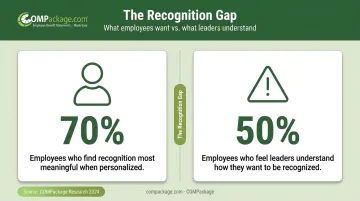
SHRM research citing a 2021 Global Culture Study found that 70% of employees consider recognition most meaningful when personalized, yet only about 50% feel leaders understand how they want to be recognized. Specific justification is what makes personalization real.
Showing Total Compensation, Not Just Base Pay
A base salary increase of $3,000 looks modest in isolation. Framed within a total compensation package worth $95,000 (including $14,000 in employer-paid benefits), the same number reads very differently.
WorldatWork reports that fewer than 40% of workers know the term "total rewards" and only 14% can explain what it means. Most employees systematically undervalue what they're earning because they only see their paycheck.
Including total compensation context directly in the adjustment statement closes that gap. Tools like COMPackage let employers generate detailed compensation reports, covering over 80 benefit categories, that can accompany or be embedded within the statement itself. Employees get a full picture of what their package is worth, not just what hits their bank account.
Supplementary Information to Consider
Depending on the adjustment type, consider also including:
- Updated role title or expanded responsibilities
- Changes to benefits eligibility triggered by the role change
- Any training or development opportunities tied to the new compensation level
- When the next compensation review is scheduled
Key Factors That Affect How Your Statement Lands
Specificity of Justification
"In recognition of your leadership on the Q3 product launch, which brought the project in two weeks early and under budget" is a different document than "in recognition of your contributions this year." The first feels personal. The second feels templated.
Employees notice the difference — and it affects how they interpret the adjustment's fairness.
Accuracy of Numbers
Any numerical error erodes trust immediately. A wrong salary figure, an incorrect effective date, or a misquoted benefits value creates doubt about everything else in the document. Always have a second reviewer check the numbers before sending.
Timing of Delivery
Deliver the statement close to when the adjustment takes effect — not weeks later. SHRM research found that 24% of employees report a reward's impact is lessened if it takes one week to receive, and 23% say the same if it takes a month. That principle applies to compensation communication as much as any other form of recognition.
Avoid delivering adjustment statements during high-stress periods — active layoffs, major project crunch, or back-to-back performance reviews — when the message is likely to be overshadowed.
Framing Total vs. Partial Compensation
A statement showing only a modest base salary change can feel underwhelming. Framing the same adjustment within total compensation tells a more complete story. Components worth including:
- Base pay (new rate and annual value)
- Employer health insurance contributions
- Retirement match
- PTO value
- Bonuses and variable pay
Retention depends on employees understanding what they actually earn. Without that visibility, even fair compensation feels inadequate.
Common Mistakes to Avoid
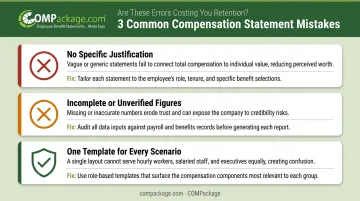
Most compensation adjustment statements fail for one of three reasons — and all three are avoidable with a little preparation:
No specific justification. Skipping the "why" is the most common mistake. It leaves employees questioning fairness, creates exposure in pay equity disputes, and misses the chance to reinforce the behaviors you want to reward.
Incomplete or unverified figures. Missing effective dates, unclear old-versus-new salary figures, or unconfirmed payroll numbers undermine credibility and can create legal complications. A simple HR pre-delivery checklist catches these errors before they reach the employee.
One template for every scenario. A generic letter used for COLA adjustments, promotions, market realignments, and performance raises produces impersonal, confusing documents. Each type calls for different tone, different justification language, and different emphasis.
Compensation Adjustment Statement Template Structure
Every statement should be personalized, but a consistent structure ensures nothing critical gets missed.
[COMPANY LETTERHEAD / LOGO]
Date: [Issue Date] To: [Employee Full Name], [Job Title] From: [Manager Name], [Title] Re: Compensation Adjustment — Effective [Date]
Opening (2–3 sentences) Acknowledge the employee by name. Reference the specific context — annual review, promotion, market realignment — that prompted this adjustment. Keep it direct and genuine.
Current Compensation State the employee's current base salary and, where relevant, current total compensation value.
The Adjustment State the specific change: dollar amount, percentage increase, and which component(s) are changing. Example: "Your base salary will increase from $X to $Y, representing a Z% adjustment, effective [date]."
Reason for the Adjustment Reference a specific achievement, metric, project outcome, or policy trigger. This is not the place for generic praise.
New Total Compensation Where possible, state the employee's new total compensation value — including employer-paid benefits, bonuses, and other components. Attach or link a detailed total compensation statement so employees see the full picture — dedicated total compensation statement software makes this easy to generate in-house.
Role or Responsibility Changes (if applicable) Note any title updates, expanded scope, or eligibility changes tied to this adjustment.
Effective Date and Payroll Reflection State the effective date and confirm when the employee will first see the change reflected in their paycheck.
Closing and Contact Thank the employee. Provide a specific contact (name, email) for questions. Note when the next compensation review is scheduled.
Signature Block Manager name, title, date, and space for employee acknowledgment signature.
What to leave out: Apologies, hedging language, information about other employees' pay, and conditions that belong in a performance improvement document. Keeping the statement clean increases its impact.
Conclusion
A compensation adjustment statement is not administrative overhead — it's a formal record of how the company backs its words with numbers. Done well, it reinforces trust, clarifies expectations, and gives employees a reason to stay. Done poorly, it creates confusion, invites fairness questions, and wastes the goodwill of a genuine pay increase.
The difference comes down to specificity, accuracy, timing, and framing. State the exact reason. Show the full compensation picture. Deliver it close to when it takes effect. Treat each adjustment type as its own communication challenge, not a template exercise.
Those extra steps are what separate employers who retain their best people from those who keep wondering why they leave. And if showing employees the full value of their compensation — base pay, benefits, bonuses, and everything in between — is part of that effort, tools like COMPackage make it straightforward to produce those reports in-house, without the overhead of a third-party service.
Frequently Asked Questions
What is a compensation adjustment statement?
A formal employer-issued document communicating a change in an employee's compensation — including base salary, bonuses, benefits, or other components. Unlike an informal pay discussion, it serves as an official record and is saved to the employee's personnel file.
What does a compensation adjustment statement look like?
It includes a personalized salutation, the employee's current and new compensation figures with an effective date, the documented reason for the change, any role or responsibility updates, and a closing with contact information. Most are one to two pages.
What is the difference between a compensation adjustment statement and a salary increase letter?
A salary increase letter typically addresses only base pay. A compensation adjustment statement is broader — it may encompass changes to bonuses, benefits, equity, or total compensation structure, making it the more complete record.
When should an employer issue a compensation adjustment statement?
Common triggers include:
- Annual performance reviews and merit cycles
- Promotions or expanded responsibilities
- Cost-of-living or market realignment adjustments
- Any situation requiring a formal documented record for HR or legal compliance
How do I ask for a compensation adjustment?
Research market benchmarks for your role and location, document specific contributions and measurable outcomes, and request a dedicated meeting with your manager. Frame the conversation around demonstrated value and current market data rather than personal financial need.
Is a 3% compensation adjustment considered good?
It depends on context. WorldatWork's 2025 Salary Budget Survey reported a U.S. average salary increase budget of 3.7% for 2025, while SHRM reported an average merit increase of 3.2%. With CPI-U rising 4.2% for the 12 months ending May 2026, a 3% increase lags inflation — meaning it's effectively a real-terms pay cut.