That gap creates real problems. Employees who only see their wages often feel underpaid. Employers who never communicate the full picture struggle to compete for talent and retain the people they've already invested in.
This article breaks down exactly what wages and total compensation mean, how they differ, and why that distinction matters when it comes to hiring, retention, and the conversations that happen in between.
Key Takeaways
- Wages = direct monetary pay (hourly rates, salaries, overtime, commissions, bonuses)
- Total compensation = wages plus the full dollar value of benefits, retirement contributions, insurance, and non-cash perks
- Benefits account for roughly 31.6% of civilian worker compensation — a figure most employees never see itemized
- Employees unaware of their full compensation often leave for a marginally higher base salary elsewhere
- Sharing a total compensation breakdown moves employees from "I only make $X" to recognizing their full value received
Wages vs. Compensation: Quick Comparison
| Factor | Wages | Total Compensation | | | :--- | :--- | :--- | | Definition | Direct monetary payment for work performed | Wages plus all employer-provided benefits and contributions | | What It Includes | Hourly pay, salary, overtime, commissions, bonuses | Wages + health insurance, retirement matching, PTO, life insurance, tuition assistance, perks | | Variability | Fixed (salary) or variable (hourly, commission) | Varies by benefit elections, employer contribution rates | | Employee Visibility | Clearly visible on every paycheck | Largely invisible without a formal breakdown | | Tax Treatment | Fully taxable income | Mixed — some benefits excluded from taxable income | | Use in Retention | Easily compared to competing offers | Reframes the full employer investment when communicated |
The visibility gap is the key takeaway here: wages show up on every pay stub, but benefit value stays invisible until someone puts an actual dollar figure on it.
What Are Wages?
Wages are the direct monetary payment an employer makes to an employee in exchange for work — the cash component of compensation, nothing more.
They come in several forms:
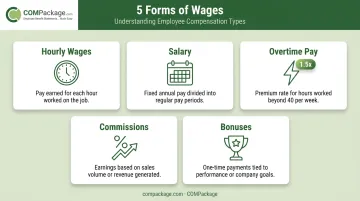
- Hourly wages — paid per hour worked; the total fluctuates week to week based on hours
- Salary — a fixed annual amount divided into regular pay periods, consistent regardless of hours (for exempt employees)
- Overtime pay — federally required at 1.5x the regular rate for non-exempt employees working more than 40 hours per week under the FLSA
- Commissions — a percentage of sales, common in customer-facing and sales roles
- Bonuses — performance-based payments that aren't guaranteed
What wages do not include: employer-paid insurance premiums, 401(k) matching contributions, the value of accrued PTO, or any other non-cash benefit. Those items don't appear on a standard pay stub, which is where most of the wages-vs.-compensation confusion originates.
Where Different Wage Types Show Up
Hourly wages dominate in retail, manufacturing, hospitality, and construction. The BLS reports over 9.7 million hourly-paid workers in leisure and hospitality and 8.4 million in manufacturing alone. Salaried pay is more common in professional, administrative, and managerial roles, while commission-heavy structures define most sales positions.
From a payroll and accounting standpoint, gross wages appear on both pay stubs and W-2s — specifically in Box 1, which reports taxable wages, tips, and other compensation. That transparency is exactly why employees tend to measure their worth by that single number, even when it leaves out a significant portion of what they actually receive.
What Is Total Compensation?
Total compensation is the complete value of everything an employer provides: direct cash pay plus every employer-funded benefit, contribution, and perk attached to the job. It represents the true cost of an employee to a business.
Beyond wages, total compensation typically includes:
- Employer-paid health, dental, and vision insurance premiums
- 401(k) or retirement plan matching contributions
- Paid time off — vacation, sick leave, and holidays
- Life and disability insurance
- Tuition or professional development assistance
- Employee assistance programs (EAPs)
- Flexible spending accounts (FSAs)
- Non-quantifiable perks like remote work flexibility
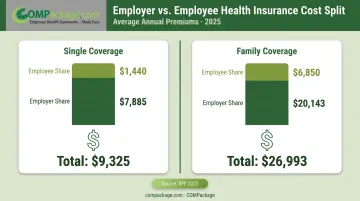
The dollar values here aren't trivial. The KFF 2025 Employer Health Benefits Survey reports average annual premiums of $9,325 for single coverage and $26,993 for family coverage — with workers contributing only $1,440 and $6,850, respectively. That means employers are funding the bulk of those premiums, yet most employees only see their own smaller payroll deduction.
The Visibility Problem
An employer may be contributing thousands of dollars annually toward an employee's health coverage, but the pay stub shows only the deduction they pay. The employer's share is invisible.
A 2024 PSCA survey of 255 U.S. full-time employees found that many working Americans remain confused about their workplace benefits and want employer help understanding them. That confusion has a cost — not just in perception, but in retention.
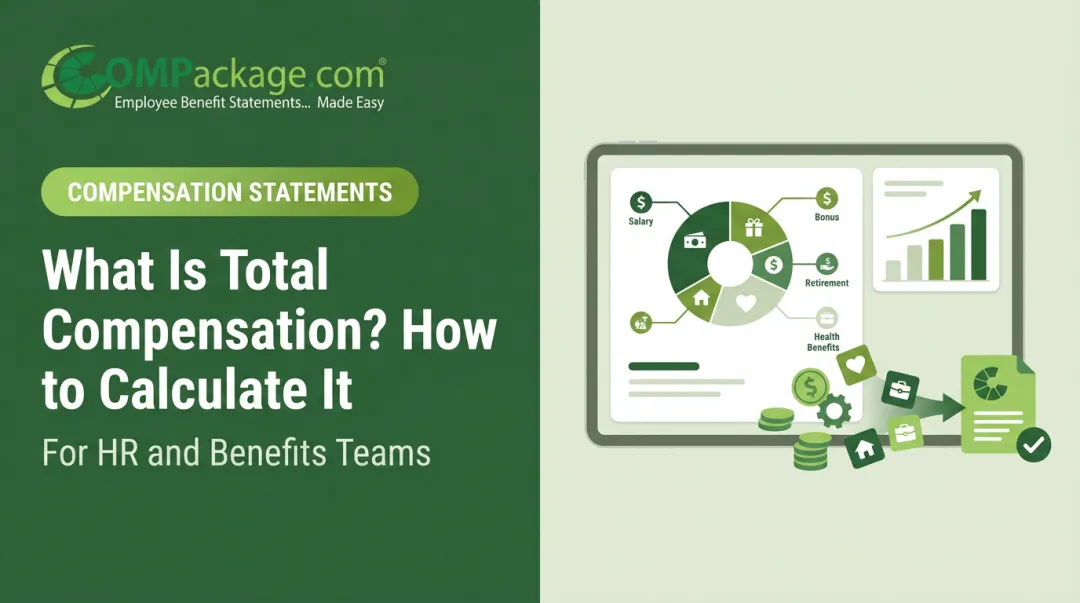
Total Compensation Statements exist to close that gap. Tools like COMPackage generate individualized reports that translate every employer contribution into actual dollar figures — covering over 80 benefit categories across branded, one-page reports.
An HR team can process an entire workforce census in a matter of hours, without outsourcing the work.
Where Total Compensation Framing Gets Used
- Job offer negotiations — candidates see the full package value, not just the base salary number
- Annual reviews — employees get a concrete dollar figure for the year's total investment in them
- Retention conversations — gives managers a factual response when a competing offer leads only with higher pay
Industries with rich benefit structures — healthcare, finance, tech, and large enterprises — rely heavily on total compensation framing. But small businesses with even modest benefit packages often look far more competitive once everything is itemized.
Wages vs. Compensation: Key Differences That Matter
Visibility and Perception
Wages are visible by design — they appear on every paycheck. Total compensation is invisible by default. That visibility gap is why employees frequently feel underpaid even when their employer is spending significantly more than the salary figure alone suggests.
When employees evaluate only wages — not total compensation — that bar becomes harder to clear, even for employers with genuinely strong packages. The perception problem isn't the pay itself; it's what goes uncommunicated.
Tax Treatment
Not all compensation is taxed the same way:
- Wages are fully taxable as ordinary income
- Employer-paid health insurance premiums are generally excluded from an employee's gross income under IRS Section 106(a)
- Traditional 401(k) elective deferrals aren't taxed until distribution, reducing the employee's current taxable income
For example: an employer contributing $8,000 annually toward an employee's health insurance premium is providing tax-advantaged value that a straight salary increase of the same amount would not deliver — the raise would be taxed, the benefit contribution generally isn't.
Impact on Recruiting and Retention
Two employers paying identical base salaries can look very different to a candidate if one communicates total compensation and the other doesn't. The employer who leads with a full breakdown — salary, health coverage, 401(k) match, PTO value — makes a more compelling offer without changing the cash number at all.
Retention follows the same logic. SHRM reported that 74% of HR professionals identified inadequate total compensation as a primary reason for turnover. And Gallup estimates replacement costs at 40% to 200% of annual salary depending on the role. Communicating total compensation upfront costs nothing — replacing the employees who leave without that context can cost far more than their annual salary.
Why This Distinction Matters for Employers
The gap between wages and total compensation creates a real communication and retention problem — one with measurable financial consequences.
Employees who perceive a gap between what they earn and what they deserve disengage or leave, even when their total compensation is objectively competitive. Gallup reports that 42% of voluntary turnover is preventable but often ignored — and compensation transparency is one of the clearest interventions available.
When to Share Total Compensation Data
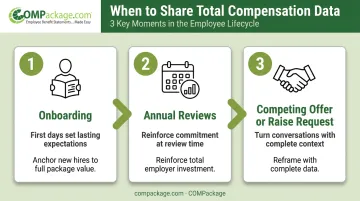
Three moments in the employee lifecycle where total compensation reports have the most impact:
- Onboarding — anchors new hires to the full value of their package from day one, not just their starting salary
- Annual reviews — reinforces the employer's total investment over the prior year before compensation expectations are reset
- When an employee raises a competing offer or requests a raise — reframes the conversation with complete data, not just a counter-salary number
COMPackage's self-service platform makes this scalable for businesses of any size. Employers can generate individualized, branded total compensation reports for every employee (covering over 80 benefit categories) without relying on expensive HR consultants or manual calculation.
The platform supports bulk data import via Excel and produces reports for an entire workforce census within hours, making consistent communication practical even for lean HR teams.
The shift this creates is straightforward: from "I only make $X" to "I receive $Y in total value from this company." That reframe matters most when a competing offer is on the table.
Conclusion
Wages are what lands in an employee's bank account. Total compensation captures the full picture: every dollar an employer contributes toward benefits, retirement, insurance, and everything beyond the paycheck. Both numbers are real; only one tends to get communicated.
Employers who close that communication gap are better positioned to retain the talent they've already invested in, compete for candidates without simply outbidding on salary, and build a workforce that understands the genuine value of their employment. Translating benefits into dollars and sharing them with employees is a direct path to fewer surprise resignations, stronger offer acceptance rates, and a workforce that feels recognized — not just paid.
Frequently Asked Questions
What is compensation or wages?
Wages are the direct monetary pay an employee receives — hourly rates, salaries, commissions, and bonuses. Compensation is the broader term that includes wages plus the full value of employer-provided benefits and non-cash perks. Every dollar in wages is also compensation, but not all compensation is wages.
What is the difference between wages and total compensation?
Wages represent the cash portion of pay that appears on a paycheck. Total compensation adds the employer's contributions to health insurance, retirement plans, paid time off, and other benefits — amounts employees often don't see itemized anywhere. For many employees, that gap can exceed 30% of their base wages.
Is salary the same as wages?
Salary is a type of wage — specifically, a fixed annual amount divided into regular pay periods. Hourly pay is another form of wages.
Are employee benefits considered compensation?
Yes. Employer-provided benefits — health insurance premiums, retirement contributions, paid time off, and similar provisions — are all components of total compensation, even though they don't appear as cash on a paycheck.
How does understanding total compensation help with employee retention?
Employees who only see their wage often underestimate how much their employer is actually spending on them. When total compensation is communicated in dollar terms, employees are less likely to leave for a marginally higher offer elsewhere — because they can see the full value they'd be giving up.
What should be included in a total compensation statement?
A complete statement should include base wages or salary, employer-paid insurance premiums, retirement plan contributions (including any employer match), the dollar value of PTO, bonuses, and any other employer-funded benefits — all expressed as annual dollar figures.