Introduction
Most employees look at their paycheck and assume that's what they earn. The reality? Your employer is likely spending 30–43% more on top of your salary — covering health insurance premiums, retirement contributions, payroll taxes, paid leave, and a range of perks that never show up on a pay stub.
That gap between perceived pay and actual cost is a retention problem hiding in plain sight. According to Gallup's 2025 survey of 10,342 US employees, 54% rated better pay or benefits as "very important" when considering a new job — yet many employees leave without ever knowing what they were actually receiving.
This guide covers:
- What a compensation package actually includes (beyond salary)
- Real-world examples for entry-level, mid-career, and small business roles
- A step-by-step process for building a competitive package
- Practical tips for communicating total compensation so employees actually value it
What Is a Compensation Package (And Why It's More Than a Salary)?
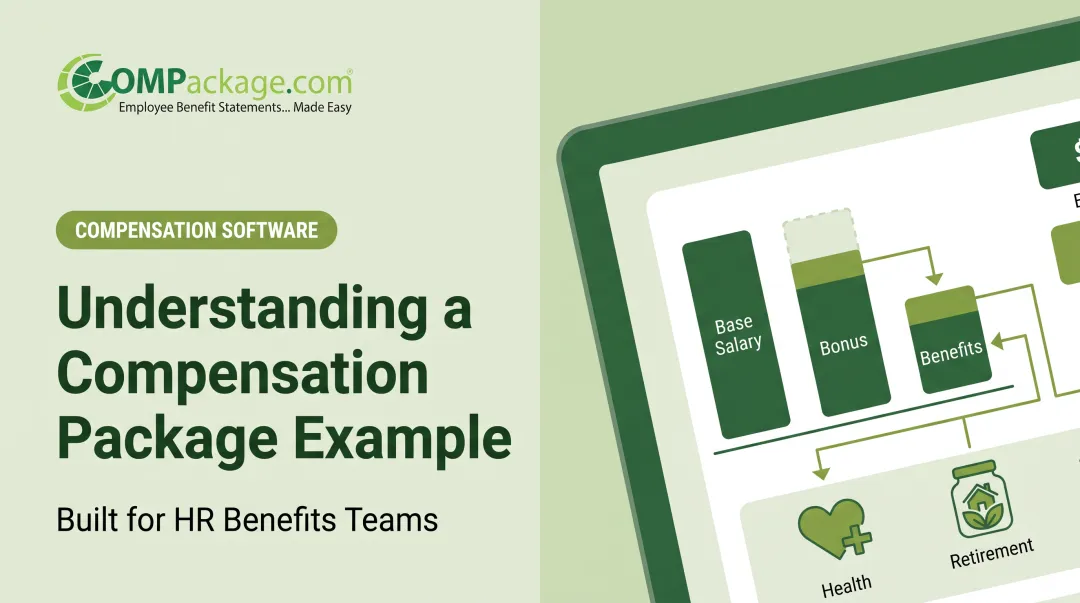
A compensation package is the full bundle of pay, benefits, and non-cash rewards an employer provides in exchange for an employee's time and skills. Salary is one line item inside that bundle, not the bundle itself.
The Gap Between Total Compensation and Take-Home Pay
Most employees focus on the number that hits their bank account. What they don't see:
- Employer-paid health insurance premiums
- 401(k) matching contributions
- Employer payroll taxes (Social Security, Medicare, FUTA, SUTA)
- The dollar value of paid time off
- Life and disability insurance coverage
Only 42% of employees report receiving a total compensation statement, according to LIMRA's 2025 Benefits and Employee Attitude Tracker. Among those who do receive one, understanding of insurance and retirement benefits improves dramatically, and so does satisfaction.
Why This Is a Strategic Problem for Employers
Employees who don't understand the value of their package often feel underpaid, even when they aren't. The result: avoidable turnover, unnecessary counteroffers, and recruiting losses to competitors whose packages aren't actually better — just better communicated.
Businesses that close this communication gap retain more people and get more credit for what they're already spending.
What to Include in a Compensation Package
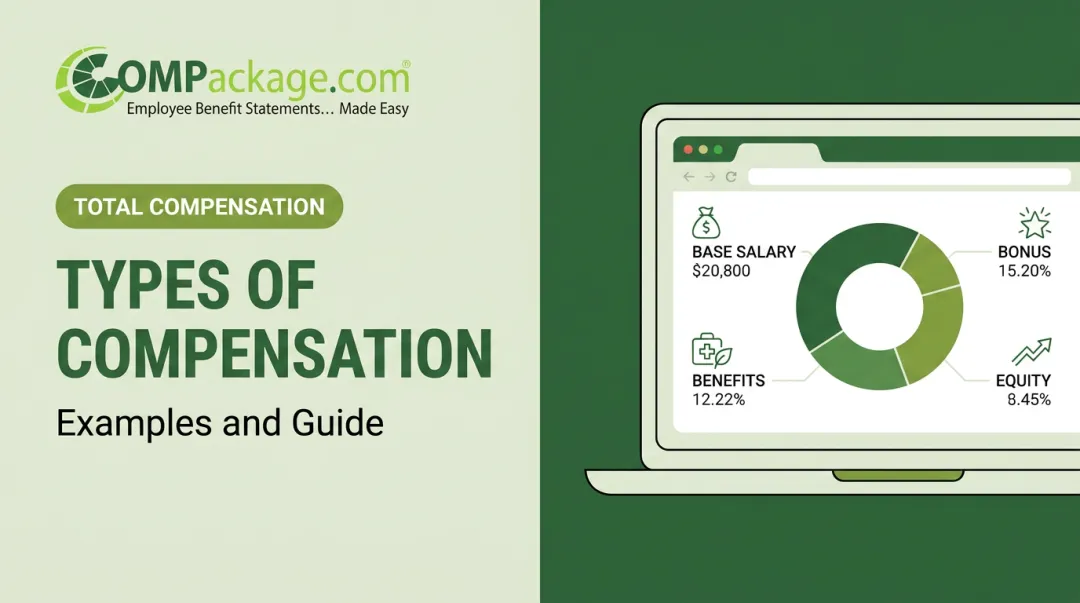
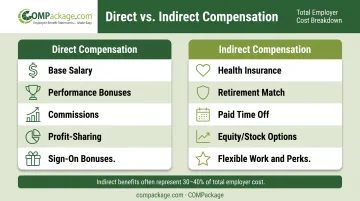
A well-rounded package draws from two categories: direct (cash) compensation and indirect (non-cash) compensation. Both belong in any honest accounting of what an employee earns.
Direct Compensation Components
These are the cash elements employees receive:
- Base salary — the fixed pay foundation; should reflect role, experience, and local market rates
- Performance bonuses — tied to individual output or company targets
- Commissions — standard in sales roles, variable by results
- Profit-sharing — distributes a portion of company profits to employees
- Sign-on or relocation bonuses — one-time cash to attract candidates or offset moving costs
Base salary is typically the largest single component, but in many roles, variable pay closes the gap significantly.
Indirect Compensation Components
Non-cash benefits often represent 30–40% of total employer cost — sometimes more. Core elements include:
- Employer-paid health, dental, and vision insurance
- Retirement plan contributions (401(k) match, pension)
- Paid time off, sick leave, and paid holidays
- Life and disability insurance
- Equity or stock options (common in tech and startups)
Beyond the standard package, perks that add real perceived value include:
- Remote work or home-office stipends
- Professional development budgets
- Wellness programs or gym memberships
- Company-provided devices
- Flexible scheduling
Work-life balance ranked as "very important" to 59% of employees considering a new job in Gallup's 2025 data, up from 53% pre-pandemic. Flexible work and development opportunities aren't soft benefits anymore; they're decision factors.
Non-quantifiable benefits such as strong culture, visible career paths, and mentorship also shape how employees value their package. They rarely get a dollar figure, but they still belong on a total compensation statement so employees see the full picture.
Sample Compensation Package Examples
What a package looks like depends on industry, company size, and role level. The three examples below use realistic figures grounded in current BLS wage data to show how the components stack up in practice.
Entry-Level Employee (Customer Service Representative)
The national median for Customer Service Representatives is $44,770/year according to BLS 2025 data.
| Component | Annual Value |
|---|---|
| Base salary | $44,770 |
| Employer health insurance contribution | $7,200 |
| 401(k) match (3%) | $1,343 |
| Paid leave value (10 days) | $1,722 |
| Employer payroll taxes (FICA + unemployment) | ~$4,200 |
| Total Compensation | ~$59,235 |
The employee sees $44,770. The employer is spending closer to $59,000. That's a $14,000 gap, and it's entirely invisible without a total compensation statement.
Mid-Level Professional (Software Developer)
BLS 2025 data puts the national median for Software Developers at $135,980/year.
| Component | Annual Value |
|---|---|
| Base salary | $135,980 |
| Performance bonus (10% target) | $13,598 |
| Employer health insurance contribution | $9,600 |
| 401(k) match (4%) | $5,439 |
| Paid leave value (15 days) | $7,845 |
| Professional development budget | $2,500 |
| Employer payroll taxes | ~$12,200 |
| Total Compensation | ~$187,162 |
BLS Employer Costs for Employee Compensation data shows employer benefit costs run approximately 43% on top of wages for private-sector workers. For a developer earning $135,980, that salary-to-total gap is substantial, and most employees never see it itemized.
Small Business Example (5–50 Employees)
Small businesses often can't offer the largest salaries or stock options. What they can offer (and should communicate clearly) is a package that competes on different dimensions.
Sample package for a small manufacturing or service company:
| Component | Annual Value |
|---|---|
| Base salary | $52,000 |
| Employer health insurance | $8,400 |
| Profit-sharing (5%) | $2,600 |
| 401(k) match (3%) | $1,560 |
| Paid leave value (12 days + 8 holidays) | $3,077 |
| Flexible schedule / remote flexibility | (non-quantifiable) |
| Employer payroll taxes | ~$4,800 |
| Total Compensation | ~$72,437 |
One COMPackage customer found that fringe benefits added 35% to 50% on top of base pay—a figure employees had never seen before they received a total compensation report. Once the full package is visible, retention and offer discussions get much more concrete.
How to Build a Competitive Compensation Package
Building an effective package is a deliberate process. Here's how to do it without guessing.
Step 1: Set Your Compensation Philosophy
A compensation philosophy is a documented stance on how you pay relative to the market. Options include:
- At market — match median pay for comparable roles
- Above market — pay premium to attract top talent
- Below market on salary, above market on benefits — offset lower base pay with generous non-cash value
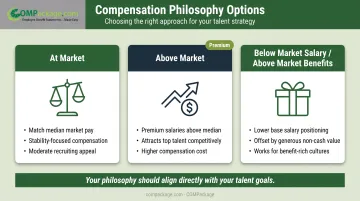
Your philosophy should connect directly to your talent goals. Without one, compensation decisions stay reactive and inconsistent.
Step 2: Research Market Rates and Industry Benchmarks
Use these sources to identify competitive pay ranges:
- BLS Occupational Employment and Wage Statistics (OEWS) — free, covers ~830 occupations nationally and by metro area
- WTW Salary Surveys — covers 32 million employees across 11,000+ organizations
- Mercer Salary Surveys — detailed role-level data across general industry and sectors
- Job posting data from LinkedIn, Indeed, or Glassdoor for real-time market signals
Always adjust for geography. A $70,000 base salary in rural Ohio lands very differently than the same offer in San Francisco.
Step 3: Identify What Employees Actually Value
Don't assume you know. Preferences shift by life stage and generation: employees with young children often prioritize childcare, while those caring for aging parents need eldercare support.
MetLife's 2024 research found:
- 63% of Gen Z employees wanted more personalized benefit recommendations
- 54% of all employees wanted personalized guidance, regardless of age
Survey your current employees annually. Ask what they actually use and what they wish you offered. The answers change over time.
Step 4: Calculate Your True All-In Cost Per Employee
Before extending an offer, know what it actually costs:
Base salary + employer payroll taxes + health/dental/vision premiums + retirement match + paid leave value + variable pay = true total cost
This math serves two purposes: it keeps HR budgets accurate, and it gives you the numbers to show employees the full value of the offer. A total compensation statement, such as those generated with COMPackage, turns that all-in figure into a clear breakdown candidates and employees can actually see.
Step 5: Review and Update Regularly
Compensation packages should be benchmarked at least once a year. Pay that was competitive 18 months ago may no longer be. Pay and benefits were the most common single reason employees left a job in 2024, according to Gallup's retention data. That is not an abstract risk.
Schedule an annual compensation review tied to performance cycles. When packages fall behind, address it before employees start shopping, and share the updated value clearly so the investment registers.
Tips for Communicating Your Compensation Package to Employees
Knowing what you offer employees isn't enough. They have to know it too.
The communication gap is real: only 42% of employees receive a total compensation statement (LIMRA, 2025). Employees who understand their benefits are far more satisfied with them.
Among those who understood their insurance and retirement benefits extremely well, more than 7 in 10 were very satisfied, compared with roughly 1 in 5 among those with no understanding at all.
The Total Compensation Statement
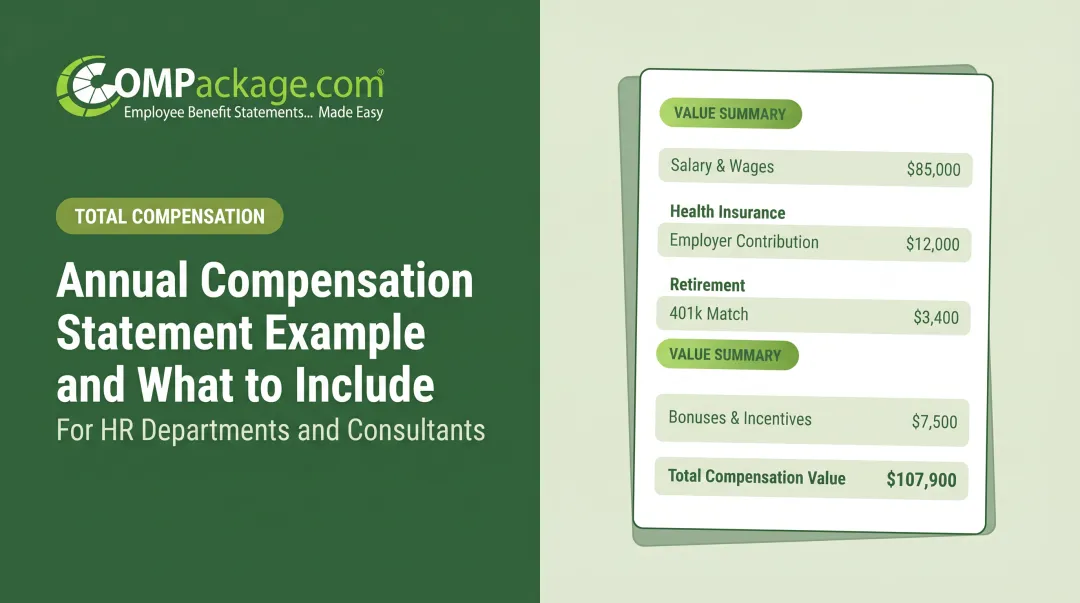
A total compensation statement — sometimes called a total rewards report — is a personalized document showing each employee the full dollar value of everything they receive:
- Base salary
- Employer-paid insurance premiums
- Retirement contributions
- Paid leave value
- Bonuses and variable pay
- Employer payroll taxes
- Additional perks with assigned values
This document does what a pay stub can't: it shows the full picture. For an employee earning $52,000 who sees a total compensation figure of $72,000+, the effect on retention and satisfaction is immediate.
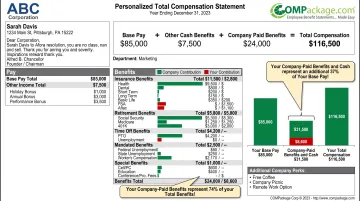
COMPackage makes this process accessible for companies of any size. HR teams can generate personalized, branded reports for an entire workforce in a few hours, with more than 80 benefit categories, 12 automated calculators, and bulk import via Employee LOADER.
Small businesses using the software have reported that fringe benefits added 35–52% to base salaries, numbers many employees had never seen laid out in one place.
Three Practical Communication Tips
- Time it right. Deliver total compensation statements during annual reviews or open enrollment — when employees are already thinking about their pay and benefits.
- Make it visual. Plain numbers on a spreadsheet don't land. Use formatted, colorful reports with clear breakdowns by category. COMPackage supports company logo, color customization, and a personalized message in the salutation area.
- Follow up with a conversation. A report alone isn't enough. Give employees a chance to ask questions about their package — what the numbers mean, how the 401(k) match works, or why certain benefits cost what they do.
Frequently Asked Questions
Can you give me an example of a compensation package?
Example: $60,000 base salary, employer-paid health insurance ($7,200/year), a 4% 401(k) match ($2,400), 15 days PTO (~$3,462), and a performance bonus up to 10% ($6,000). With employer payroll taxes, the package tops $80,000, well above base pay alone.
What are the three P's of compensation?
Mercer's framework defines them as Pay for Position (job complexity and grade), Pay for Person (skills and market worth), and Pay for Performance (variable pay and long-term incentives). Align all three so your strategy draws and keeps the people you need.
What is the difference between a compensation package and a salary?
Salary is one number: the fixed cash paid for the role. A compensation package is the full picture: salary plus employer-paid benefits, retirement contributions, bonuses, equity, paid leave, and perks that never show on a paycheck. The gap is often 30–43% or more.
What should a total compensation statement include?
At minimum: base salary, employer-paid insurance premiums, retirement contributions, paid leave value, bonuses, and employer payroll taxes (Social Security, Medicare, unemployment). Show each component and the total clearly, not only a lump sum.
How can small businesses compete on compensation without the highest salaries?
Offer strong non-cash benefits (flexible schedules, generous PTO, profit-sharing, professional development) and communicate their full value clearly. An employee who sees $72,000 in total compensation next to a $52,000 salary weighs the offer very differently than someone who only sees the salary line.