The confusion usually comes from conflating two different things: a base salary paid on a quarterly schedule versus quarterly performance bonuses paid on top of regular wages. They're not the same, and the rules around them differ significantly.
This article covers both. You'll find a clear explanation of how quarterly pay works, what state and federal law actually says, the honest pros and cons for employers and employees, how payroll taxes work on a quarterly cycle, and practical guidance on whether this structure makes sense for your workforce.
Key Takeaways
- Quarterly pay (four paychecks per year) isn't federally prohibited, but most states require more frequent pay schedules for regular employees
- S-Corp shareholder-employees, business owners, and consultants are the most common users of quarterly pay
- 59% of workers want to be paid weekly or more often—quarterly pay creates real retention risk for hourly and lower-wage roles
- Payroll taxes don't disappear with quarterly pay—federal deposit schedules follow your lookback period liability, not your payroll frequency
- Employees paid quarterly often underestimate their total compensation, making clear benefits communication critical to retention
What Is Quarterly Pay and How Does It Work?
Quarterly pay means employees receive a paycheck once every three months, aligned to the standard fiscal quarters:
- Q1: January–March
- Q2: April–June
- Q3: July–September
- Q4: October–December
Paychecks are typically issued at the end of each quarter, though some employers issue them at the start of the following quarter. Either way, employees receive four paychecks per year.
Two Different Things Called "Quarterly Pay"
The term gets used in two distinct ways, and conflating them causes real confusion:
- Quarterly pay schedule — base salary paid on a quarterly cycle, four times per year
- Quarterly bonuses — supplemental performance-based payments made each quarter, on top of a regular weekly or biweekly paycheck
This article focuses primarily on the pay schedule itself. If your employees receive biweekly paychecks plus a quarterly performance bonus, that's a standard biweekly schedule with an add-on bonus program — not quarterly pay.
How Quarterly Pay Compares to Standard Pay Frequencies
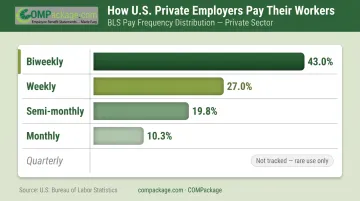
According to BLS Current Employment Statistics data, the breakdown of private-sector pay frequencies as of February 2023 looks like this:
| Pay Frequency | Share of Private Establishments |
|---|---|
| Biweekly | 43.0% |
| Weekly | 27.0% |
| Semi-monthly | 19.8% |
| Monthly | 10.3% |
| Quarterly | Not reported as a standard category |
Quarterly pay doesn't appear as a tracked category in BLS data at all — a clear sign of how rarely it's used for regular W-2 employees. Most employers who do use it apply it to commissioned salespeople, senior executives, or contract-based roles rather than hourly or salaried staff.
Is Quarterly Pay Legal? State Laws and Requirements
The short answer: it depends on your state.
Federal law (the Fair Labor Standards Act) doesn't set a minimum pay frequency. The FLSA's Handy Reference Guide only requires that wages be paid on a regular, predetermined schedule. There's no federal prohibition on quarterly pay.
State law is a different story. Most states impose minimum pay frequency requirements, and many require at least semi-monthly or monthly pay for regular employees. The DOL's State Payday Requirements resource is the place to start for your state's specific rules.
Three High-Population State Examples
- California: Most employees must be paid at least twice per calendar month. Executive, administrative, and professional employees may be paid monthly, but no later than the 26th of the month.
- New York: Manual workers must be paid weekly. Clerical and other workers must be paid at least twice per month.
- Texas: Non-exempt employees must be paid at least semi-monthly. Exempt employees may be paid monthly.
None of these states permit quarterly pay for regular W-2 employees.
The Shareholder-Employee Exception
S-Corp owners who pay themselves a salary are technically W-2 employees of their own company. Some businesses structure quarterly salary payments for these shareholder-employees because IRS rules about reasonable compensation focus on the amount paid — not the frequency.
State payday frequency laws still apply, though. No state reviewed for this article creates a separate pay-frequency carve-out for shareholder-employees.
Bottom line: Before adopting a quarterly schedule for any employee — including yourself — verify the rules with a CPA or employment attorney familiar with your state.
Pros and Cons of Quarterly Pay
Advantages for Employers
Running payroll four times a year instead of 26 (biweekly) or 52 (weekly) cuts processing cycles dramatically. For small business owners managing payroll manually or paying per-run fees to a payroll provider, this adds up.
Keeping funds in the business longer between payroll cycles gives companies with seasonal or project-based revenue more room to manage operating expenses. A construction firm or real estate business with lumpy income can align large payroll outflows with periods of higher cash availability.
Quarterly pay also naturally syncs with quarterly tax filings, Form 941 deadlines, FUTA deposits, and business performance reviews. For small S-Corps, this alignment can simplify the overall financial calendar.
Challenges and Drawbacks
Receiving a paycheck four times a year makes personal budgeting extremely difficult for most employees. Rent, utilities, groceries, and debt payments don't pause between quarters.
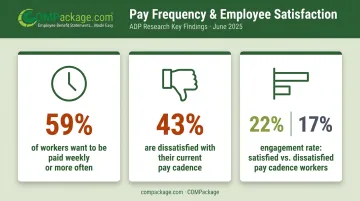
ADP Research published in June 2025 found that 59% of workers want to be paid weekly or more frequently, and 43% are dissatisfied with their current pay cadence—89% of those dissatisfied workers want to be paid more often. Workers satisfied with their pay rhythm were also more likely to be highly engaged (22% vs. 17%) and less likely to report significant on-the-job stress (29% vs. 37%). Offering quarterly pay to candidates who expect at minimum a biweekly schedule creates a real recruiting disadvantage.
Without regular payroll runs to catch errors, tracking hours, overtime, deductions, and mid-quarter benefit changes across 13 weeks requires meticulous documentation. An error discovered in week 11 is much harder to correct than one caught in week 2.
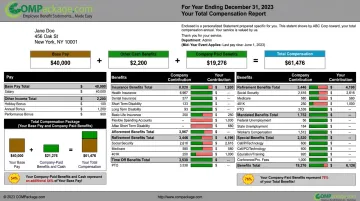
Employees paid quarterly tend to anchor their sense of compensation to their quarterly check—and nothing else. Employer-paid health insurance, 401(k) matches, paid time off value, and other benefits become invisible, which skews how employees perceive their own pay.
This is why total compensation communication matters more on quarterly schedules than on any other. Tools like COMPackage's total compensation statement software help employers show employees the full picture—health and dental insurance, retirement contributions, employer-paid taxes, paid time off, and other perks—so satisfaction isn't anchored solely to the quarterly paycheck. COMPackage covers over 80 benefit categories, giving employees a complete view of what their employer actually invests in them.
Tax Implications and Payroll Processing for Quarterly Pay
Switching to a quarterly pay schedule doesn't reduce what you owe in taxes—it only shifts when you remit them.
What Stays the Same
- Federal income tax withholding — calculated the same way regardless of frequency; IRS Publication 15-T includes a quarterly payroll period table for this purpose
- Social Security tax — 6.2% from the employee, 6.2% from the employer
- Medicare tax — 1.45% from the employee, 1.45% from the employer
Federal Deposit Schedules
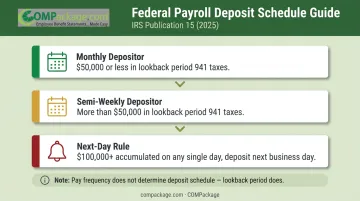
Here's where employers often get confused. Your federal deposit schedule—monthly or semi-weekly—is determined by your lookback period tax liability, not how often you run payroll.
Per IRS Publication 15 (2025):
- Employers with $50,000 or less in Form 941 taxes during the lookback period are monthly depositors
- Employers with more than $50,000 are semi-weekly depositors
- The $100,000 next-day rule applies regardless of your normal schedule—if you accumulate $100,000 or more in taxes on any single day, you must deposit the next business day
A quarterly payroll can still create a large single-day tax liability, which could trigger the next-day rule unexpectedly. Confirm your deposit obligations with your CPA before running your first quarterly payroll.
FUTA Works in Your Favor
Federal unemployment tax (FUTA) is already deposited quarterly when the liability exceeds $500. Quarterly payroll aligns naturally with this schedule—one less timing mismatch to manage.
- FUTA: Deposit quarterly when liability exceeds $500
- SUTA: Check your state's unemployment tax deadlines separately, as they vary by state
Year-End W-2 Preparation
With only four payroll runs per year, the accuracy of each one carries more weight at year-end. Accurate quarterly records for hours, deductions, benefit changes, and garnishments make W-2 preparation much smoother than trying to reconstruct details after the fact.
Who Benefits Most from Quarterly Pay?
S-Corp Shareholder-Employees
This is the most common legitimate use case. IRS guidance requires S-Corps to pay reasonable compensation to shareholder-employees before making non-wage distributions. The IRS focus is on whether the compensation amount is reasonable—not specifically on whether it's paid weekly, monthly, or quarterly.
For a business owner running a small S-Corp with irregular cash flows, quarterly salary payments can provide more flexibility while still meeting reasonable compensation requirements. That said, state pay frequency rules still apply.
Project-Based and Seasonal Businesses
Businesses where income arrives in project-sized chunks are often better positioned to absorb quarterly payroll cycles. This includes:
- Independent consultants and freelancers with milestone-based billing
- Real estate professionals earning commission on closings
- Construction firms paid on project completion schedules
- Seasonal operations with concentrated revenue windows
When cash flows in irregular waves, aligning payroll outflows to match makes operational sense.
Where Quarterly Pay Doesn't Belong
Quarterly pay creates genuine hardship for:
- Hourly workers who depend on regular income to cover living expenses
- Entry-level employees with limited savings buffers
- Any workforce segment where competitors offer biweekly or semi-monthly pay
For these groups, the retention and recruiting disadvantages outweigh any administrative savings.
How to Make Quarterly Pay Work for Your Employees
If your business structure makes quarterly pay genuinely appropriate, these steps reduce the risk of it backfiring.
1. Set expectations in writing before day one. Provide new hires with a written pay schedule listing all four pay dates for the year. Explain how deductions work across the quarter and what happens if employment ends mid-quarter.
2. Build a disciplined mid-quarter record-keeping system. Track hours, overtime, PTO, and any benefit or deduction changes in real time—not at the end of the quarter. A 13-week gap between payroll runs is long enough for significant errors to accumulate undetected.
3. Communicate total compensation proactively. Employees on quarterly schedules go weeks without a visible reminder of what they're earning. That silence creates dissatisfaction, even when pay is competitive.
A total compensation statement tool like COMPackage helps close that gap. Employers can show employees the full value of their package — health insurance, retirement contributions, employer-paid taxes, paid time off, and perks like parking or company-provided equipment — not just what the quarterly check reflects.
4. Verify legal compliance before you start. Given the variation in state pay frequency laws, consult a CPA or employment attorney before implementing a quarterly schedule — especially if you have employees in multiple states. What's permissible for a shareholder-employee in one state may not be permissible for a salaried exempt employee in another.
Frequently Asked Questions
What is a typical quarterly bonus?
Quarterly bonuses vary widely by industry, role, and company size. They're separate from a quarterly pay schedule—an employee can receive biweekly paychecks and still earn a quarterly performance bonus.
Can you pay your employees quarterly?
It depends on your state. Federal law doesn't prohibit it, but most states require more frequent pay schedules for regular W-2 employees. Always verify your state's pay frequency requirements before adopting a quarterly payroll schedule.
Is it normal to get paid quarterly?
No—quarterly pay is uncommon for regular employees and doesn't appear as a standard category in BLS pay frequency data. It's most typical for S-Corp shareholder-employees or business owners, not standard W-2 employees.
What does employee quarterly compensation mean?
It can mean two things: total wages earned over a three-month period (for tax reporting purposes), or a pay schedule where paychecks are issued once per fiscal quarter. The distinction matters when reviewing payroll records or tax filings.
How do payroll taxes work when employees are paid quarterly?
The same federal and state taxes apply regardless of pay frequency. Withholding for Social Security, Medicare, and federal income tax is reported on Form 941 each quarter. Your federal deposit schedule (monthly or semi-weekly) is determined by your lookback period liability, not how often you run payroll.
What is the difference between quarterly pay and a quarterly bonus?
Quarterly pay refers to the pay schedule itself—receiving base salary four times per year. A quarterly bonus is a supplemental payment on top of regular wages, based on performance or company results. Employees can receive one, both, or neither.