Introduction
Competing for talent against larger employers is one of the toughest challenges small business owners face. A candidate weighing two offers — one from a 500-person company with full health coverage and a 401(k) match, and one from a 20-person shop with neither — often chooses the bigger package, even when the salary is comparable.
The assumption that comprehensive benefits are out of reach for smaller operations is widespread, but it doesn't hold up. According to Gallup, 64% of employees say a significant increase in income or benefits is very important when considering a new employer. That's not a Fortune 500 problem — it's every employer's problem.
The good news: a well-prioritized benefits package is achievable at almost any size. Many high-impact benefits cost far less than owners expect, and some cost nothing at all. This guide covers which benefits matter most to employees, how to prioritize them on a small business budget, and how clearly communicating your total compensation package can make your offer more competitive than it looks on paper.
Key Takeaways
- 64% of employees rank benefits as a top factor when evaluating a new job
- Health insurance, retirement plans, and flexible work are the three highest-impact benefit categories
- Replacing an employee costs 40–200% of their annual salary — a cost that typically exceeds what most benefits packages run annually
- High-value benefits like flexible scheduling and EAPs often cost little to nothing out of pocket
- Employees who don't understand their full benefits package undervalue what they're receiving — clear communication is just as important as the benefits themselves
What Are Employee Benefits for Small Businesses?
Employee benefits cover all compensation beyond base salary. That includes two distinct categories:
Legally required benefits (apply to virtually all employers):
- Social Security and Medicare (FICA) contributions
- Federal and state unemployment insurance (FUTA/SUTA)
- Workers' compensation (governed by state law)
Voluntary benefits (offered at the employer's discretion):
- Health, dental, and vision insurance
- Retirement plans (401(k), SIMPLE IRA)
- Paid time off
- Life and disability insurance
- Flexible work arrangements and wellness programs
One important legal note: under the ACA, employers averaging fewer than 50 full-time employees are not required to provide health insurance. That legal exemption doesn't make voluntary benefits optional in practice. BLS data from 2025 shows medical and retirement benefits are available to 59% of workers at establishments with 1–99 employees, compared to 90% at establishments with 500 or more.
That 31-point gap tells candidates exactly where to look for better benefits. Small businesses that close it, even partially, gain a real recruiting and retention edge over competitors who don't bother.
The Three Benefit Categories That Matter Most
The goal isn't to replicate a large-company package. It's to address the real financial, health, and lifestyle concerns your specific employees have. These three categories deliver the highest impact per dollar invested.
Health and Insurance Benefits
Health insurance is the most valued benefit in the American workforce, by a wide margin. A 2022 U.S. Chamber of Commerce survey found that 96% of workers said employer-sponsored health insurance was important when deciding whether to accept a job.
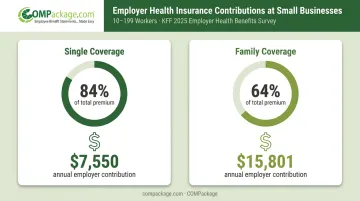
For small businesses specifically, KFF's 2025 Employer Health Benefits Survey found that at firms with 10–199 workers:
- Average employer contribution for single coverage: $7,550/year (84% of total premium)
- Average employer contribution for family coverage: $15,801/year (64% of total premium)
That's a real commitment — and it pays off. Employers who cover even a portion of premiums signal genuine investment in their team, which directly affects offer acceptance rates and long-term retention.
Beyond medical, consider these lower-cost additions:
- Dental and vision — frequently requested, relatively inexpensive to add
- Life insurance — BLS data shows employer costs average just $0.05 per employee hour worked
- Disability insurance — short- and long-term options that protect income during illness or injury
Small businesses with fewer than 25 employees may also qualify for the Small Business Health Care Tax Credit — up to 50% of employer-paid premiums for two consecutive tax years, through the SHOP marketplace.
Financial Benefits
Financial stress is a productivity issue as much as a personal one. PwC's 2024 Employee Financial Wellness Survey surveyed 3,500 U.S. employees and found that 59% reported financial stress — and 71% of Gen Z employees said that stress reduced their productivity at work.
The most accessible financial benefits for small businesses:
- 401(k) or SIMPLE IRA plan — Even without employer matching, employees with no other retirement savings option value it all the same. The SECURE 2.0 Act provides a startup tax credit of up to $5,000/year for three years for eligible small employers. Employers with 50 or fewer employees who add matching contributions can claim an additional credit of up to $1,000 per eligible participant.
- Employer matching — Even a modest match (3% of salary) dramatically increases perceived compensation value
- Structured PTO policy — A written, consistent policy makes paid leave feel like a real benefit rather than an informal favor
- Annual cost-of-living adjustments — Signals that compensation keeps pace with inflation
Among employers, 82% view 401(k) or similar plans as important for attracting employees, according to Transamerica Institute's 2025 research. Yet only 57% of private-sector firms with fewer than 100 employees offered a retirement plan in 2023 — leaving substantial competitive ground open for businesses that step up.
Workplace Flexibility and Wellness Benefits
Flexible work is no longer a perk — it's an expectation. McKinsey's American Opportunity Survey found that 87% of workers offered flexible work use it. Among remote-capable employees, Gallup found roughly 60% prefer hybrid schedules and fewer than 10% prefer fully on-site work.
The case for wellness investment is equally strong. SHRM's 2025 data found that 61% of Gen Z workers would strongly consider leaving for a job with significantly better mental health benefits.
Many of the most appreciated flexibility perks also require no direct spending:
- Flexible start/end times or compressed workweeks
- Remote or hybrid options (where role allows)
- Summer Fridays or birthday days off
- Pet-friendly workplace policies
Paid offerings with strong ROI:
- Employee Assistance Programs (EAPs) — Counseling, financial coaching, legal referrals, typically available for a few dollars per employee per month. EAP access is available to only 27% of workers at establishments with fewer than 100 employees, versus 75% at large employers — another significant gap to close.
- Wellness stipends — Even $50/month for gym memberships or mental health apps is highly valued
Small businesses have a structural advantage here that large employers genuinely cannot replicate: the ability to offer individualized scheduling, direct manager relationships, and a culture where employees are seen as people rather than headcount.
What Happens When Small Businesses Skip Benefits
The instinct to hold off on benefits until the business is larger is understandable. The math rarely supports it.
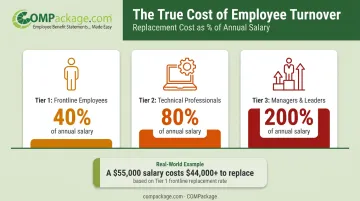
Turnover costs are the most immediate hit. Gallup estimates replacement costs reach approximately 200% of annual salary for managers and leaders, 80% for technical professionals, and 40% for frontline employees. A single mid-level departure at a $55,000 salary can cost $44,000 or more — more than most annual benefits programs cost.
The recruiting disadvantage compounds from there. Without a benefits package:
- Job postings attract a narrower candidate pool
- Offers get rejected at higher rates
- Hiring timelines stretch, costing more with each cycle
Employees without health coverage, retirement options, or financial security also bring those stressors to work. They show up physically but disengage mentally, degrading team performance in ways that don't always register until the damage is done.
The structural problem is the least obvious and often the costliest. A business that reaches 30 or 50 employees without a benefits framework faces a much harder transition than one that built it at 10. Early hires who accepted lower compensation feel retroactively undervalued when newer employees get benefits they never received — and that resentment is difficult to walk back.
Getting benefits right early is nearly always cheaper than correcting course later.
Getting the Most Value from Your Benefits Package
Offering benefits is half the job. The other half is making sure employees actually understand what they're receiving.
Survey Before You Spend
Before adding or expanding benefits, ask your employees what they actually want. An anonymous survey, a quick one-on-one conversation, or a short departmental discussion reveals which benefits matter most to your specific workforce — and prevents spending on programs that go unused. A 10-person team of 28-year-olds has very different priorities than a team of 45-year-olds approaching retirement.
Show Employees Their True Compensation
Most employees think about their compensation in terms of their take-home paycheck. That's typically 50–65% of what the employer actually pays. The employer's share of health premiums, retirement contributions, FICA taxes, workers' compensation, paid leave value, and other benefits add up to amounts that would genuinely surprise most employees if they saw them clearly.
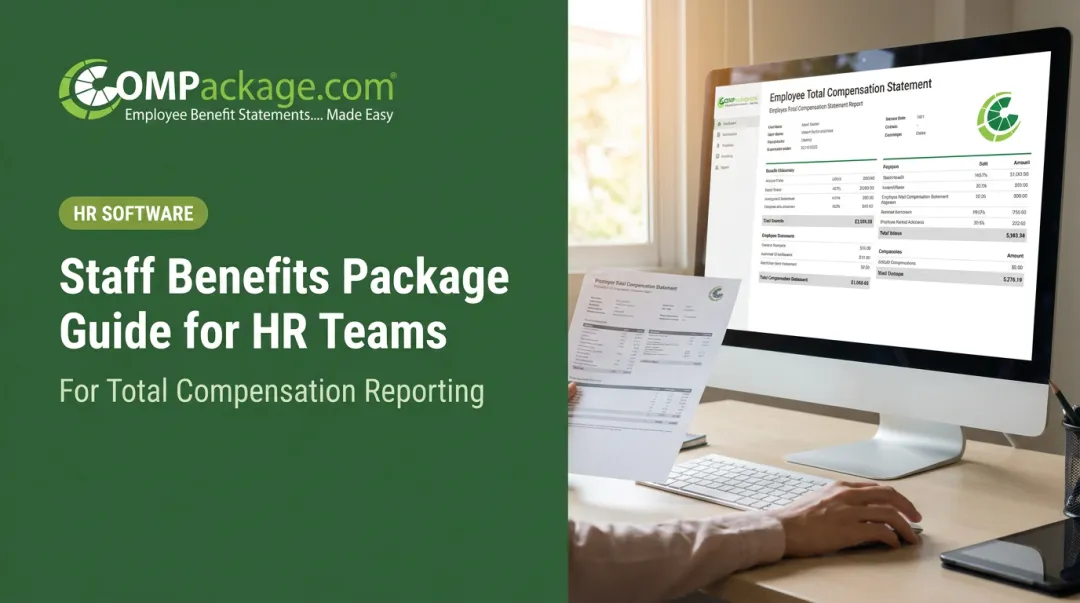
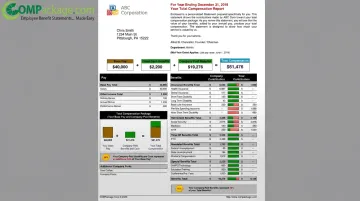
Total compensation reports — documents that itemize salary alongside every employer-paid benefit — close that perception gap. Tools like COMPackage let small businesses generate these reports quickly and affordably, showing each employee their complete picture:
- Health premium contributions
- Retirement matching amounts
- PTO dollar value
- Wellness stipends and other perks
Employees who see the full number are far less likely to feel underpaid, and less likely to leave for a lateral move that only looks better on the surface.
Communicate Year-Round, Not Just at Open Enrollment
Benefits communication shouldn't happen once a year. After salary reviews, when new benefits are added, or when team members hit work anniversaries — these are all natural moments to remind employees of what they're receiving. COMPackage supports year-round report regeneration at no additional cost, making ongoing communication practical.
The business that offers strong benefits but never makes sure employees know about them captures only half the retention value they paid for.
Conclusion
A benefits package that competes effectively doesn't require matching every line item in a Fortune 500 benefits guide. It requires addressing the real concerns your employees have — their health coverage, their financial security, their ability to balance work with the rest of their lives.
The competitive advantage compounds. Lower turnover, faster hiring, and stronger engagement are all downstream of a benefits strategy that's thoughtfully designed and clearly communicated. Every dollar saved by skipping benefits tends to surface as a much larger cost somewhere else — in turnover, in recruitment, in the ongoing drag of a disengaged workforce.
Offer the benefits that matter. Then make sure every employee understands the full value of what they're receiving — not just their base salary, but the complete picture of what their compensation package includes. Tools like total compensation statements make that communication concrete, turning a strong benefits package into something employees can actually see and appreciate.
Frequently Asked Questions
What benefits do small businesses offer?
Common offerings include health insurance, retirement plans (like a 401(k)), paid time off, and dental/vision coverage. To compete for talent, many small businesses now also offer flexible schedules and mental health support.
Are small businesses required to offer employee benefits?
While all employers must cover Social Security, Medicare, and workers' compensation, most other benefits are optional for businesses with under 50 employees. However, offering health insurance and retirement plans is critical for attracting and retaining talent.
How much do employee benefits cost a small business?
Costs range from significant to zero. Health insurance is the largest expense, with employers contributing an average of $7,550 annually for single coverage. In contrast, high-impact perks like flexible scheduling have little to no direct cost.
What is the most important benefit to offer employees?
Health insurance, retirement plans, and paid time off are consistently the most valued benefits. However, priorities vary by demographic; younger employees often value flexibility and mental health support, while older workers may focus more on 401(k) plans.
How can a small business compete with large companies on benefits?
Small businesses can compete on flexibility, culture, and personalization. Instead of matching every corporate perk, focus on offering the few key benefits that matter most to your specific team to maximize your impact.
How do I show employees the full value of their benefits package?
The best method is a total compensation report that itemizes all employer-paid costs, including health premiums, retirement matches, and PTO. Software like COMPackage makes it easy to generate these statements, showing employees the true value of their package and boosting retention.