The right software cuts HR admin hours, reduces compliance exposure, and helps employees actually see what they're getting. In fact, 84% of employers now say benefits are critical to attracting and retaining workers, according to LIMRA's 2026 workplace benefits research. This guide breaks down the platforms worth considering and a category most companies overlook entirely.
TL;DR
- Employee benefits software automates enrollment, compliance, and payroll syncing beyond a basic HRIS
- This guide covers platforms for small, mid-market, and enterprise teams: ADP, Gusto, BambooHR, Rippling, and Justworks
- A separate category, total compensation statement software, helps employees see the real dollar value of pay and benefits
- Platforms were evaluated on compliance automation, payroll integration, carrier connectivity, scalability, and total cost
Overview of Employee Benefits Software in the US Market
Employee benefits software is a digital platform that automates the core work behind health, retirement, and voluntary benefits programs:
- Enrollment and life-event changes
- Compliance tracking and required notices
- Payroll syncing and contribution deductions
- Reporting for finance, carriers, and auditors
The market has grown as healthcare costs and regulatory complexity climb together. According to Mercer's analysis, the average US employer health-benefit cost per employee will jump 6.5% in 2026—the sharpest increase since 2010.
Add ACA reporting thresholds, COBRA notice deadlines, and ERISA fiduciary rules, and spreadsheets stop being a workable system. That load is why benefits administration software became its own category instead of a feature buried in generic HR tools.
Below, we cover the top platforms serving US businesses of different sizes, plus a complementary tool type most buyers don't know exists.
Top Employee Benefits Software Platforms in the US
We evaluated each platform on five criteria: carrier connectivity, compliance automation, payroll integration, scalability, and user experience. Here's how the major players stack up.
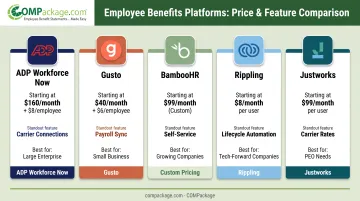
ADP Workforce Now
ADP Workforce Now is a comprehensive HCM platform with benefits administration built for midsize to large enterprises, backed by connections to more than 900 carriers and other organizations.
Strong compliance automation covers ACA, HIPAA, and COBRA, and its Decision Support tool adds AI-guided plan recommendations. NelsonHall named ADP an overall leader in its 2026 Benefits Administration NEAT report, reinforcing its position among larger buyers.
| Category | Details |
|---|---|
| Pricing | Custom quote-based; no published starting price |
| Key Features | 900+ carrier connections, automated open enrollment, mobile access, built-in compliance |
| Best For | Mid-to-large enterprises needing a unified HR, payroll, and benefits suite |
Gusto
Gusto is an all-in-one payroll and HR platform popular with small and medium US businesses, with benefits enrollment synced directly to payroll deductions.
Simple pricing and automated ACA reporting make it a strong fit for teams without a dedicated benefits administrator.
| Category | Details |
|---|---|
| Pricing | Starts at $49/month + $6/person/month (Simple plan); higher tiers add ACA filing and broker integration |
| Key Features | Payroll-integrated benefits, mobile enrollment, ACA compliance automation |
| Best For | Small to mid-sized businesses (under 200 employees) wanting affordable payroll-benefits integration |
BambooHR
BambooHR combines benefits administration with performance management and payroll tools built for small to mid-sized companies.
Its strongest feature is employee self-service. Workers select and update benefits directly in the platform, cutting HR's workload during open enrollment significantly.
| Category | Details |
|---|---|
| Pricing | Custom quote-based, tiered by employee count starting around $10/employee/month for the base platform |
| Key Features | Retirement plan integration, employee self-service, payroll sync |
| Best For | Small to mid-sized businesses (1-500 employees) in retail, hospitality, and healthcare |
Rippling
Rippling is a unified HR, payroll, and IT platform that automates the full employee lifecycle, including benefits enrollment and eligibility tracking.
Hundreds of integrations and automated lifecycle workflows cut manual errors as headcount grows fast.
| Category | Details |
|---|---|
| Pricing | Core platform starts at $8/employee/month; benefits module priced separately by quote |
| Key Features | Lifecycle automation, automated eligibility tracking, extensive integrations |
| Best For | High-growth businesses (50-1,000 employees) needing integrated HR, payroll, and IT |
Justworks
Justworks is a PEO-style HR platform combining benefits administration with compliance support and direct access to major insurance carriers.
It gives smaller employers access to enterprise-level carrier rates—think Aetna, United Healthcare, Kaiser Permanente—without the complexity of a traditional PEO relationship.
| Category | Details |
|---|---|
| Pricing | PEO Basic at $79/employee/month; PEO Plus at $109/employee/month, no base fee |
| Key Features | Built-in HIPAA/ACA compliance, broad benefits range, established carrier access |
| Best For | Small to mid-sized businesses wanting competitive benefits without managing multiple vendors |
The Missing Piece: Total Compensation Statement Software
Every platform above solves enrollment and compliance. None of them fix a separate gap: employees don't understand what they're actually getting paid.
Aflac's 2024-2025 WorkForces Report found only 49% of employees understood everything about their health coverage, and 71% wanted more information about their benefits.
That gap matters. Employees who fully understood their coverage were 84% satisfied with their benefits, compared to just 49% among those who understood only some of it, per Aflac's survey data.
This is the exact gap COMPackage was built to close.
What COMPackage Does
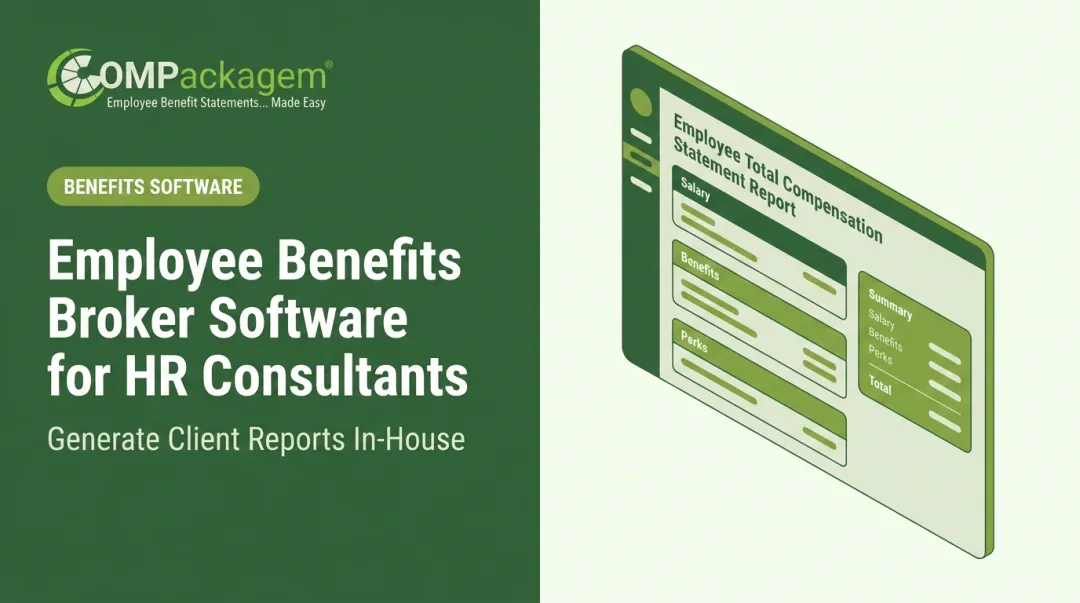
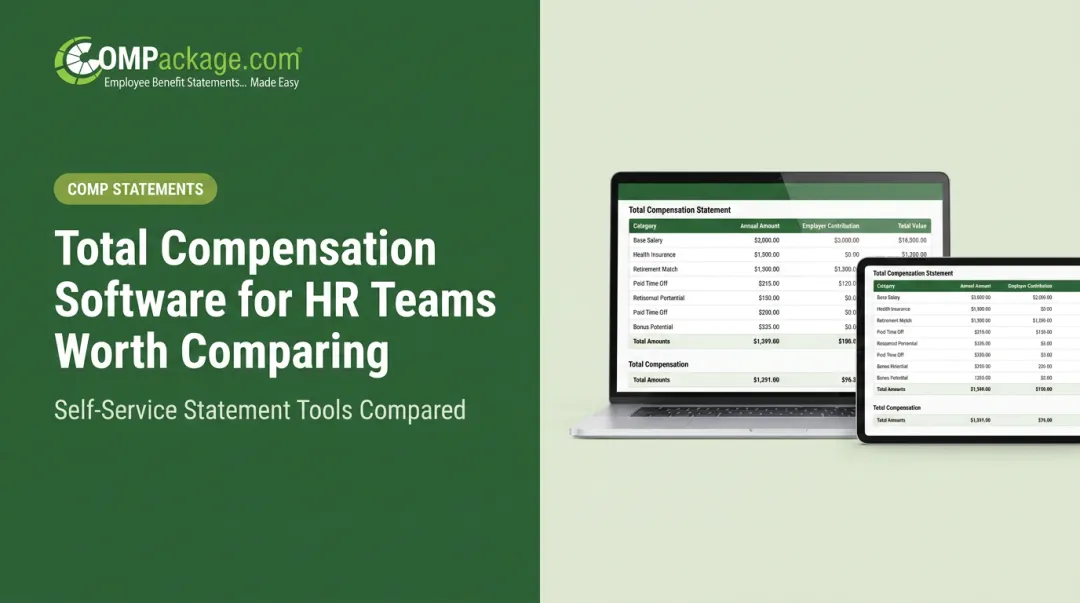
COMPackage generates individualized Total Compensation Reports combining base pay, over 80 benefit categories, and non-quantifiable perks. Spreadsheets and benefits portals rarely communicate those well.
- Employee LOADER imports a full employee census from Excel in minutes (100 or 1,000 employees)
- 12 auto calculators pre-fill government mandatories, insurance benefits, and time-off values
- Custom branding adds company logos and color schemes to every report
- Free year-round updates allow manual edits anytime and unlimited report reruns
Napa Valley Petroleum, a COMPackage customer, found that fringe benefits added 35% to 50% of value on top of base pay for some employees. Bullard Manufacturing reported a similar boost of 42% to 52%. Those numbers rarely surface without a total compensation statement.
| Category | Details |
|---|---|
| Pricing | Published annual tiers from $149/year (1-5 employees) to $2,599/year (unlimited); Professional plan at $2,999/year for service providers |
| Key Features | Free report changes year-round, customizable branding, manual edit access anytime, 30-day satisfaction guarantee |
| Best For | Small and mid-sized businesses, insurance agencies, HR/benefits consultants, and payroll providers who want to show employees and recruits the real value of their offer |
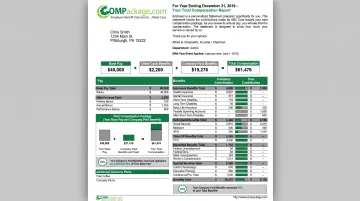
COMPackage isn't a replacement for the platforms listed above—it's a complement. Companies typically run a benefits administration platform for enrollment and compliance, then use COMPackage alongside it to communicate the full value of that pay-plus-benefits package to employees and recruits.
How We Chose the Best Employee Benefits Software
The most common mistake buyers make? Picking a platform based on brand recognition instead of fit for their actual company size and workflow.
We weighted our evaluation on factors tied directly to business outcomes:
- Compliance automation — how much ACA, HIPAA, and COBRA tracking the platform handles without manual intervention
- Payroll/HRIS integration depth — whether benefit deductions sync automatically or require duplicate entry
- Carrier connectivity — the breadth of insurance carriers and financial institutions the platform connects to natively
- Scalability — whether the platform grows with headcount without forcing a painful re-platform later
- Total cost of ownership — published pricing versus custom quotes, and what's bundled versus billed separately
Conclusion
The right benefits software matches your operational needs, not just your familiarity with the brand name. Before committing, weigh scalability, integration depth, and the actual employee experience during enrollment.
Don't stop at administration, though. Smooth enrollment doesn't automatically translate into employees who understand or appreciate what they're receiving. Pair a platform like Gusto, BambooHR, or Justworks with COMPackage to get both efficient administration and clear employee appreciation of their total compensation package.
Frequently Asked Questions
What is employee benefits software?
Employee benefits software is a digital platform that automates enrollment, compliance tracking, and reporting for health, retirement, and voluntary benefits. Unlike a basic HRIS that tracks general employee records, it focuses on plan management and regulatory compliance.
What's the difference between benefits administration software and a total compensation statement tool?
Administration software like ADP or Gusto manages enrollment, eligibility, and compliance. A statement tool like COMPackage communicates the dollar value of pay plus benefits directly to employees, closing the understanding gap that admin platforms don't address.
How much does employee benefits software cost?
Pricing models vary: some vendors publish per-employee-per-month rates (Gusto, BambooHR, Justworks), while others like ADP require a custom quote. Cost depends on headcount, feature depth, and whether compliance modules are bundled in.
Can benefits administration software integrate with payroll?
Yes. Most modern platforms sync benefit elections directly with payroll deductions, avoiding duplicate data entry and reducing errors during enrollment periods and life-event changes.
How do I choose the right employee benefits software for my business size?
Start with headcount, then match feature needs and integration requirements to your existing payroll or HR stack. A 30-person business rarely needs the same platform as a 2,000-person enterprise.
Do employees actually need to see a total compensation statement?
Yes. Aflac workforce research links clearer benefits understanding to higher employee satisfaction. Showing total compensation supports both retention and recruiting.