Introduction
Workers' compensation is an employer-paid cost, usually tied to payroll and job risk. Employers often struggle to budget a reliable figure because the average cost per employee swings widely across U.S. businesses.
An office with five clerical staff and a roofing crew of five will not pay anything close to the same amount.
There is no single national price per employee. Insurers rate job classifications, wages, state rules, claims history, and other factors.
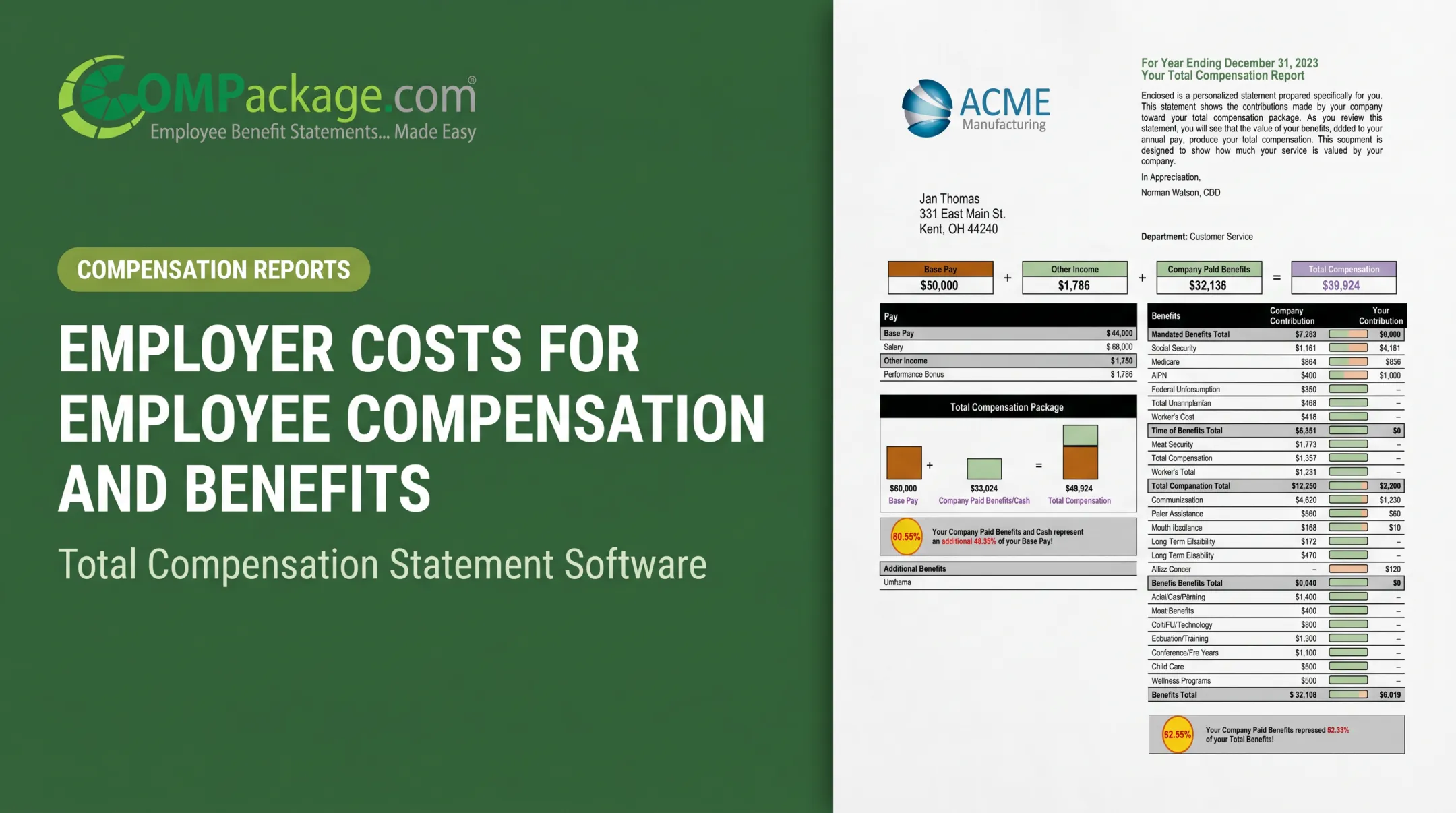
In one sample compensation statement, workers' comp appears as an $818 employer-paid contribution with nothing deducted from the employee. That is one illustration, not a benchmark.
This article covers current cost benchmarks, the calculation method, pricing drivers, related expenses, budgeting steps, and common mistakes.
Key Takeaways
- Published averages describe policies from specific insurers or states, not a universal per-employee rate.
- Job duties, payroll, state, and claims history matter more than headcount.
- Premium divided by employees gives a rough figure that hides big differences between workers.
- Budget for audits, fees, payroll changes, and cash-flow timing, not just the quote.
How Much Does Workers' Comp Insurance Cost Per Employee?
Workers' comp has no fixed per-employee price. Insurers generally calculate premium from payroll and classification rates, then apply modifiers and adjustments.
Typical U.S. Cost Benchmarks
Each figure below comes from a different source and population, so don't treat any of them as a universal rate.
| Source | Figure | What it covers |
|---|---|---|
| Oregon DCBS (2024 rates) | $1.09 per $100 payroll | Median jurisdiction index across 50 states plus DC; not an employer's actual premium |
| Insureon (updated April 2026) | $54/month; $643/year per policy | Small-business customers, most with fewer than five employees; methodology describes medians |
| The Hartford (updated May 2026) | About $81/month; elsewhere $86/month | Insurer-specific customer averages; sample details undisclosed |
Know the units. A rate per $100 of payroll is an exposure-based input. A monthly or annual figure is the cost of a whole policy. A per-employee number is just that policy divided by headcount, an allocation rather than a rate.
Class rates also differ widely. Florida's joint underwriting association published 2026 rates per $100 of payroll for a handful of classes:
- Clerical (8810): 0.105, with a $254 minimum premium
- Restaurants (9082): 1.160
- Retail (8017): 1.179
- Carpentry (5403): 4.364
- Roofing (5551): 6.752
These are Florida examples, not a national ladder. The business's actual classification controls pricing.

How to Calculate an Average Cost Per Employee
Estimate the total annual premium, then divide by covered employees. For seasonal or growing businesses, use average headcount, which reflects the year better than a single day's count.
The common framework, per NCCI's experience rating guide:
Payroll ÷ 100 × class rate × experience modification = estimated premium
Sum the result across classes. State rating systems and insurer rules can change the final figure.
A $20-Per-Hour Employee Example
Assumptions for this walkthrough:
- 2,080 annual hours (52 weeks × 40)
- Florida clerical class 8810 at a 0.105 rate
- 1.00 experience modification
- Annual wages: $20 × 2,080 = $41,600
- Premium: $41,600 ÷ 100 × 0.105 × 1.00 = $43.68

That is a rate-only component. The same Florida table lists a $254 minimum premium, so $43.68 isn't a purchasable policy price. Fees and other charges are excluded.
Change the duties, state, claims history, or insurer, and the same $20 wage produces a different number.
Key Factors That Affect Workers' Comp Cost Per Employee
Insurers price workplace exposure and expected payroll, not simply the number of people on staff.
Job Duties and Classification Codes
Classification codes reflect the work performed. A clerical employee is rated very differently from a roofer. Florida's rate table shows 0.105 against 6.752.
Don't classify by job title alone. Florida's NCCI guidance explains that the business is classified, with standard exceptions such as clerical, rather than each worker by occupation.
Payroll, Wages, and Workforce Mix
Total payroll drives premium. Bonuses and commissions are generally included in North Carolina's rules. Overtime treatment depends on state rules and records. North Carolina excludes only the premium portion above the regular rate, and only with separate overtime records.
Part-time, seasonal, and high-turnover staffing all shift payroll. Two employees counted as "one head" can carry very different premiums.
State Laws and Location
Requirements, rating rules, and market structure vary. Four states use exclusive state funds:
- North Dakota
- Ohio
- Washington
- Wyoming
Texas coverage is elective. Check your state agency before assuming thresholds or exemptions.
Claims History and Experience Modification
The experience mod compares your losses with similar employers. Below 1.00 is a credit; above 1.00 is a debit. Eligibility depends on state thresholds. Frequency generally carries more weight than severity.
Your own claims follow you, while market-wide rate changes hit everyone. Keep the two separate.
Number and Type of Workers
Full-time, part-time, temporary, leased, and independent workers are treated differently, depending on state law and facts.
California's ABC test, for example, requires hiring entities to prove all three prongs; a contractor label alone doesn't count. In New York, leased employees require coverage, and most people serving a for-profit business count as employees, including part-timers.
Outdated worker records create audit surprises.
Policy Structure and Risk Management
These policy choices affect price and cash flow:
- Minimum premiums
- Payment arrangements
- Deductibles (where offered)
Safety programs can matter too, but savings vary. New York's Code Rule 60 offers specified credits for certified safety and return-to-work programs (4% in year one, 2% in years two and three), with eligibility conditions. Don't assume a similar reduction elsewhere.

What the Cost Includes—and How Lower-Cost Policies Compare With Higher-Cost Options
The quote is only part of the cost. Policy documents determine the coverage, exclusions, charges, and obligations.
Initial Premium and Payroll Audit Adjustments
The initial premium rests on projected payroll. After the term, the insurer audits actual payroll. Higher payroll can mean additional premium; lower payroll can mean a return premium, per the California Department of Insurance.
Reporting major payroll changes during the term can reduce large audit adjustments.
Related Charges and Payment Timing
Look beyond base premium:
- Minimum premiums, which cover issuing and servicing costs
- Expense constants (New York requires one, amount varies by carrier)
- State assessments (New York's 2026 assessment is 7.0% of standard premium, not payroll)
- Installment or administrative fees
Payment structure is a cash-flow choice. Berkley Southeast's SmartPay bills from payroll exposures and waives down payment and installment fees, yet it still audits afterward. A payment plan doesn't lower the underlying premium.
Lower-Cost Versus Higher-Cost Options
Compare quotes on:
- Classification accuracy and payroll assumptions
- Coverage, exclusions, and deductibles
- Claims support and audit practices
- State compliance
An unusually low quote may rest on understated payroll or a more favorable class. Find out why before you buy.
Showing Workers' Comp as Part of Total Compensation
Employer-paid premiums can appear as a benefits line on a total compensation statement, showing employees the full value of their package. COMPackage is a self-service tool for organizing and presenting employer-paid benefits alongside wages. It isn't an insurance calculator or provider.
How to Estimate the Right Budget—and Avoid Common Cost Mistakes
A useful budget reflects your workforce, payroll trends, state obligations, and likely audit adjustments, not a generic national average.
Build a Payroll and Classification Inventory
List each employee or worker group by:
- State
- Duties and classification
- Expected wages and schedule
- Planned hiring or turnover
Separate payroll by classification and location rather than applying one average to everyone.
Apply the Premium Formula Carefully
For each class, calculate payroll ÷ 100 × class rate. Sum those amounts, multiply by the experience modification rate (mod) where applicable, then add state or insurer adjustments. Divide by headcount for a planning figure, not a quote.
Add Fees, Audits, and Growth Scenarios
Add taxes, assessments, fees, deposits, and possible audit differences. Model at least one growth and one reduction scenario, since payroll-based premium moves with both.

Review the Quote Before Selecting Coverage
Check these before signing:
- Classification codes and estimated payroll
- State coverage and limits
- Deductibles and exclusions
- Mod treatment
- Insurer services and payment terms
Confirm unclear classifications with a licensed insurance professional or your state authority.
What Most Employers Miss
- Dividing premium by headcount, ignoring wage and risk differences
- Using stale payroll data
- Misclassifying workers or overlooking contractors
- Assuming the quote covers every charge
Skipping coverage carries real penalties. California imposes a misdemeanor fine of at least $10,000 for uninsured employers, and New York allows up to $2,000 per 10-day period for uninsured stretches. Choosing only the lowest upfront price can cost far more through audit balances, coverage gaps, or poor claims support.

Conclusion
The average cost per employee is a starting benchmark. Your payroll, classifications, state, claims history, and policy structure set the actual premium.
Build a classification-based budget, verify current state requirements, and treat workers' comp as both an insurance expense and part of total employee compensation.
Frequently Asked Questions
What is the average workers' comp insurance cost per employee?
No universal per-employee average exists. Insurer and industry figures, like Insureon's $643 per policy per year, describe customer groups. Your premium depends on payroll, classification, state, and claims history.
How do you calculate workers' compensation insurance cost per employee?
Estimate premium as payroll ÷ 100 × class rate × experience mod, summed across classes. Then divide by covered employees or average headcount.
How much does a $20-per-hour employee cost an employer, including workers' comp?
The workers' comp portion depends on payroll, classification, state, and claims history. Our example assumed 2,080 hours, Florida class 8810, and a 1.00 mod, giving $43.68 before minimums and fees.
How much does workers' comp insurance cost in New York?
It varies by classification, payroll, claims history, and current requirements. New York's loss costs fall 21.9% effective October 2026, but insurers apply their own multipliers. Get a quote from a licensed insurer.
How much should workers' comp insurance cost in California?
Premiums depend on classification, payroll, experience mod, and each insurer's filed rates. WCIRB's advisory pure premium is up 6.6% for September 2026 policies, but a current quote beats any national average.
Who needs to register for workers' compensation?
Obligations vary by state, employee count, worker status, and industry. California says one or more employees triggers compliance. Verify with your state workers' compensation authority.