Here, unique employee benefits means offerings that go beyond standard pay, health insurance, retirement plans, and basic paid time off. Unique can mean personalized or unusually useful. It doesn't have to mean expensive or gimmicky.
Below you'll find benefit ideas grouped by employee need, a framework for choosing affordable options, and practical advice for communicating their total value.
Key Takeaways
- The best benefits solve real employee problems and fit your culture.
- Mix low-cost policies, voluntary benefits, and targeted financial support.
- Let employee feedback and participation data decide what stays.
- Benefits only work when employees understand them and can use them.
Why Unique Employee Benefits Matter
Recruitment and retention
When competitors offer similar salaries, benefits differentiate your offer.
A November 2025 poll found health insurance quality was very important to 45.3% of respondents and important to another 32.3% when weighing an offer or staying with an employer. That finding covers benefits quality overall. Unique options still help you stand out when core packages look alike.
Benefits also address why people leave. SHRM's 2024 data shows 45% of burned-out workers are job-searching, versus 16% of other workers. Financial stress, rigid schedules, caregiving strain, stalled development, and feeling unrecognized often drive those exits.
Benefit or perk?
A benefit provides meaningful support or protection, such as paid parental leave. A perk is an optional convenience or experience, such as snacks or a team outing. Both work when they're relevant, equitable, and consistent with company values.
What "generous" really means
Cost and item count alone do not define generosity. Look for:
- Breadth across needs
- Real usefulness
- Easy access
- Employee choice
- Clear communication
- Fairness across remote, hybrid, onsite, hourly, and salaried staff
Risks of launching without a strategy
- Low participation
- Administrative complexity
- Unequal access
- Unclear tax treatment
- Employee skepticism
Review applicable federal, state, and local requirements before launch. Fringe benefits are generally taxable unless a specific exclusion applies, and cash equivalents like gift cards never qualify as de minimis.
Unique Employee Benefits Ideas by Category
Financial security and career growth
- Student loan assistance: about 10% of employers offer it (SHRM 2026). Eases debt pressure for early-career staff.
- Tuition reimbursement: offered by 46% of employers (SHRM 2024).
- Financial coaching: 32% offer non-retirement financial advice.
- Emergency savings: roughly four in ten surveyed firms offer payroll-deduction accounts (EBRI 2025).
- Career and work supports: professional development funds, retirement education, home-office or commuting support.
- Equity or ownership: ESOPs need careful design and legal advice.
IRS Section 127 allows up to $5,250 per employee annually for qualifying education and student-loan payments, with a written plan and nondiscrimination rules. Lower-cost options include financial-wellness webinars, a small learning stipend, or paid conference time.
Flexibility and time
- Flexible schedules and hybrid work (57% offer hybrid, SHRM 2026)
- Compressed workweeks (27%) and four-day pilots
- Meeting-free Fridays and summer hours
- Birthday or milestone PTO
- Volunteer time off (28.4% of surveyed employers)
- Paid sabbaticals (6% paid, 8% unpaid)
Flexibility needs guardrails: workload limits, coverage plans, and consistent manager decisions. Exos reported burnout dropping from 70% to 36% after its four-day pilot, though it changed work design at the same time.

Unlimited PTO needs clear rules. An Empower poll found employees with unlimited PTO took 16 days versus 14 under limited policies. Still, set minimum-use expectations and have managers model time off.
Family, caregiving, and life-stage support
- Paid parental leave (46%), adoption leave (33%), foster leave (26%)
- Childcare or backup-care support
- Eldercare navigation (11%)
- Fertility and reproductive-health help (50% of large employers cover IVF, Mercer 2026)
- Flexible bereavement leave
- Pet insurance (27%)
- Phased return-to-work programs
Write eligibility language inclusively, and validate demand first. The dependent-care FSA exclusion rises to $7,500 for 2026. FMLA gives only unpaid, job-protected leave to eligible employees. Thirteen states plus DC have paid family and medical leave programs, so check what your state already covers.
Holistic physical and emotional wellbeing
- EAP access (72% of large employers) and counseling
- Therapy or meditation subscriptions
- Wellness stipends and fitness reimbursement
- Preventive-care support
- Sensory accommodations
- Sleep and recovery initiatives
- Mental-health days (16%)
Awareness is the weak spot: 67% of workers are unaware or only somewhat aware of employer mental-health resources, and 50% feel uncomfortable using them. Keep programs voluntary, never require disclosure of health information, and share only aggregate data. ADA, GINA, and HIPAA rules can apply.
Belonging, recognition, and personalized experiences
- Peer-to-peer recognition budgets
- Employee resource groups
- Mentorship (26% offer formal programs)
- Learning or hobby stipends
- Charitable matching (25.1%) and team volunteer time
- Remote culture budgets
- Lifestyle spending accounts
Gallup's tracking found well-recognized employees were 45% less likely to have turned over two years later. That's an association, and it doesn't isolate peer recognition. Choice is the draw here: a lifestyle account lets each person spend on what supports them.

How to Choose the Right Benefits for Your Workforce
Start with employee listening
Use anonymous surveys, focus groups, stay interviews, exit feedback, manager observations, and utilization data. Sample questions:
- What financial pressures affect you most right now?
- Which scheduling changes would help most?
- Do caregiving duties affect your work?
- What would improve your well-being?
- Which current benefits don't you understand?
Gallup found 42% of voluntary leavers say their manager or organization could have prevented their departure, so listening early pays.
Segment needs without creating unfairness
Needs differ among caregivers, early-career staff, older workers, remote staff, frontline teams, and employees with accessibility needs. For example, only 50% of hourly workers earning under $15 an hour believe they can afford needed health care (Mercer 2025). JAN reports 61% of accommodations cost nothing.
Stipends, voluntary options, and benefit menus give choice while keeping eligibility rules transparent.
Match benefits to culture and goals
Tie each benefit to one objective: better hiring, less avoidable turnover, improved attendance, skill growth, or community involvement. Reject perks that conflict with your values or pressure people to participate.
Build a budget on total cost
Compare fixed-cost benefits, per-employee benefits, reimbursements, voluntary benefits, partnerships, and no-cost policy changes. Count administration, communication, payroll, compliance, and coverage costs, not only the sticker price.
For context, BLS data from June 2026 puts benefits at 30.0% of private-industry compensation, or 25.9% at establishments with 1-49 workers. That includes legally required costs. Gallup estimates replacing a frontline worker costs about 40% of salary.
Pilot, review, and refine
- Test one or two benefits with a defined group or timeframe.
- Set success measures before launch.
- Collect feedback from participants and managers.
- Review participation and retention signals.

If a benefit is underused, fix the communication or design before canceling.
How to Communicate, Administer, and Measure Benefits
Make the value visible
Present benefits during recruiting, onboarding, annual enrollment, performance talks, and retention conversations. Skip the long document. For each benefit, state:
- Who's eligible
- What the employee must do
- Limits
- One practical example
Aflac and Kantar's 2025 research found 51% of employees who get year-round benefits communication fully understand their policies, versus 38% without it. A MetLife study found employees who receive benefit communications are twice as loyal to their employer.
Show the complete package with total compensation reports
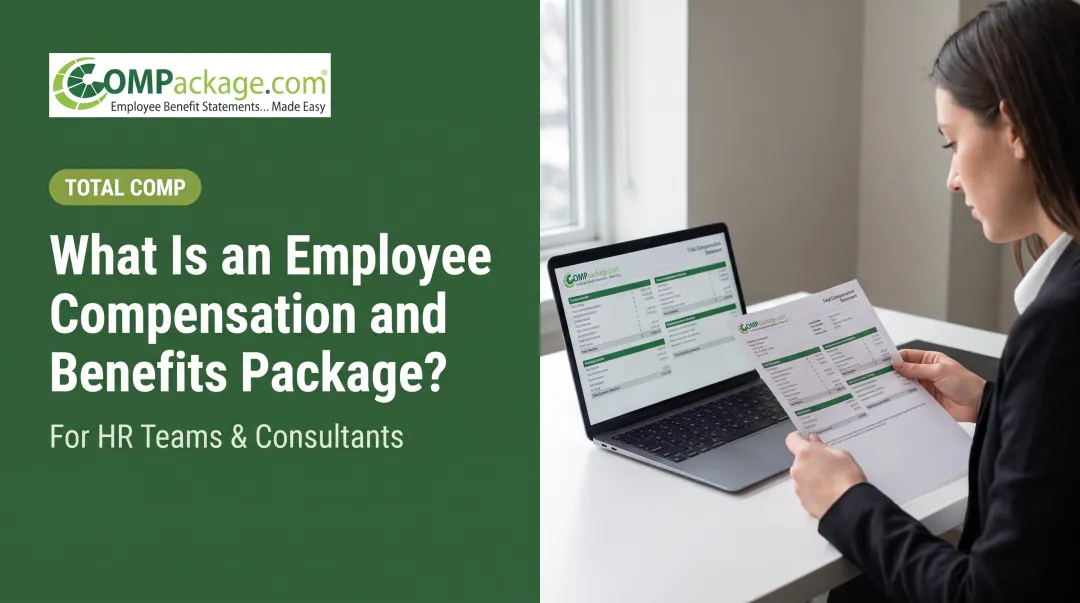
A total compensation statement adds pay and benefits into one number. COMPackage is a self-service example. Its features include:
- Customizable reports with a company logo and colors
- Over 80 benefit-category ideas
- Bulk data import from Excel through its Employee LOADER
- Manual editing of benefit details
- Free report updates as compensation changes
Only benefits an employee actually receives appear on their report. COMPackage's own sample shows $56,000 in base pay and $32,138 in employer-paid benefits, for $89,924 in total compensation. That is the kind of figure employees rarely see.

Track engagement and outcomes
Watch these signals over time:
- Enrollment and utilization
- Employee questions and survey sentiment
- Offer acceptance rates
- Absenteeism and internal mobility
- Voluntary turnover
Protect privacy with aggregated data. Don't claim a benefit caused an outcome without a comparison group, timeframe, or supporting evidence.
Conclusion
The best unique benefits aren't the most lavish. They solve real problems, reflect your values, offer choice, and stay accessible to the people they're meant to support.
Your next steps:
- Listen to employees about what would actually help day to day.
- Pick one focused pilot instead of launching everything at once.
- Communicate the full value of each benefit so people see what they're getting.
- Measure participation and outcomes, not just launch-day buzz.
- Refine based on what you learn.
Frequently Asked Questions
What are the top employee benefits?
Healthcare, retirement support, paid leave, flexibility, financial wellbeing, mental health, and career development are widely valued. Priorities vary by workforce, so ask your employees.
What are some uncommon employee benefits?
Examples include sabbaticals, emergency savings support, pet insurance, lifestyle stipends, volunteer time off, caregiving assistance, and hobby or learning allowances.
What is a generous benefits package?
Generosity depends on usefulness, affordability, breadth, choice, accessibility, and communication. Neither the number of benefits nor their cost defines it.
What is a perk in a company?
A perk is an optional convenience, while a core benefit provides meaningful support or protection. Examples include commuter support, flexible Fridays, recognition rewards, meal support, and wellness credits.
How can small businesses afford unique employee benefits?
Start with low-cost policy changes, flexible work, recognition programs, voluntary benefits, targeted stipends, and partnerships. Prioritize based on employee feedback.
How do you measure whether employee benefits improve retention?
Compare participation, sentiment, hiring outcomes, absenteeism, and voluntary turnover over time. Account for other factors that influence retention.