The gap is real. In March 2026, BLS data showed private-industry part-time workers had 23% access to medical plans and 11% participation. Many employers don't know which benefits they must provide, which they can, and how to explain it all.
This guide defines part-time status, separates legal requirements from optional benefits, covers common benefit designs, and shows how to administer and communicate the package consistently.
Key Takeaways
- No single hours threshold decides eligibility for every benefit.
- Evaluate health, retirement, leave, insurance, and perks separately.
- Written eligibility rules, consistent proration, and accurate hour tracking reduce disputes.
- A total compensation statement shows part-time staff what they actually earn.
What Counts as a Part-Time Employee?
No single definition applies
Different bodies use different standards:
- BLS: usually working fewer than 35 hours a week.
- FLSA: doesn't address part-time status. An employer's label doesn't change how the law applies.
- ACA: full-time means an average of 30 hours of service a week, or 130 a month.
- Your policy: whatever your handbook and plan documents say, unless a federal, state, local, or plan rule overrides it.
Define part-time status in your handbook, offer letters, payroll records, and plan documents. Then check that no outside rule overrides your definition.
Related worker classifications
Part-time employees differ from full-time, seasonal, temporary, casual, and independent-contractor workers. Classification affects wage rules, tax treatment, leave, benefits, and reporting.
Whether someone is an employee or an independent contractor matters too. "Worker" is a broad term; "employee" is a legal category. The IRS common-law test looks at behavioral control, financial control, and the type of relationship, not job titles or hours.
The DOL's new contractor rule takes effect January 22, 2027, so check current guidance.
Why classification matters
Classification and actual hours can affect:
- ACA measurement and reporting
- Overtime
- Retirement plan participation
- Paid leave
- Unemployment and workers' compensation coverage
What Benefits Are Required for Part-Time Employees?
Federal and state baseline protections
These apply regardless of part-time status:
- Minimum wage and overtime for non-exempt employees (1.5 times the regular rate after 40 hours in a workweek)
- Payroll taxes: 6.2% Social Security each for employer and employee (up to $184,500 in 2026) and 1.45% Medicare each
- Workers' compensation, under state rules
- Unemployment insurance, with state-specific eligibility
- Anti-discrimination rules (most EEOC laws apply at 15 employees)
These baseline costs add up. Legally required benefits often account for about 7.7% of total compensation.
State and local rules layer on more obligations:
- Connecticut's 2026 sick leave expansion covers employers with 11 or more employees; part-time workers generally accrue one hour per 30 worked, up to 40 hours a year
- Chicago, New York City, Philadelphia, and Seattle each set their own sick leave rules
- Oregon's predictive scheduling law covers large retail, hospitality, and food-service employers
Affordable Care Act considerations
Part-time hours count toward applicable large employer status, which means 50 or more full-time employees including full-time equivalents.
- Look-back method: a measurement period (3-12 months for new variable-hour or part-time hires) sets status for a stability period of at least six months.
- Affordability: 9.96% of income for plan years beginning in 2026.
- Penalties: 2026 indexed amounts are $3,340 under 4980H(a) and $5,010 under 4980H(b). These depend on statutory triggers, not automatic per-worker fines.
- Reporting: Forms 1094-C and 1095-C.

An internal "part-time" label doesn't remove ACA obligations if the employee averages 30 hours.
Leave and retirement rules
The FLSA doesn't require health insurance or paid time off. FMLA eligibility requires 12 months of employment, 1,250 hours in the prior 12 months, and 50 employees within 75 miles. State programs may be broader. Verify before denying leave.
For retirement, SECURE 2.0 requires 401(k) plans to admit long-term part-time employees after two consecutive years with 500+ hours (plan years beginning in 2025), age 21 or older. The special route doesn't require employer matching, and 500 hours counts as a vesting year. Confirm details with your plan administrator or ERISA counsel.
This article is educational, not legal or tax advice. Check current DOL, IRS, EEOC, state agency, carrier, and plan-document guidance.
Which Benefits Can Part-Time Employees Receive?
Health, dental, and vision
Employers may offer these voluntarily, subject to ACA rules, carrier participation requirements, and state restrictions. A plan generally can't impose a waiting period over 90 days once someone is eligible.
Policies should specify who pays premiums, whether contributions are prorated, which dependents qualify, and what happens when hours change.
Retirement savings
Part-time employees may access 401(k) and Roth options. Keep eligibility and employer contributions distinct so staff know what they can put in versus what the company adds.
Paid time off and leave
Common options include:
- Prorated vacation and personal time
- Sick leave and holidays
- Parental and bereavement leave
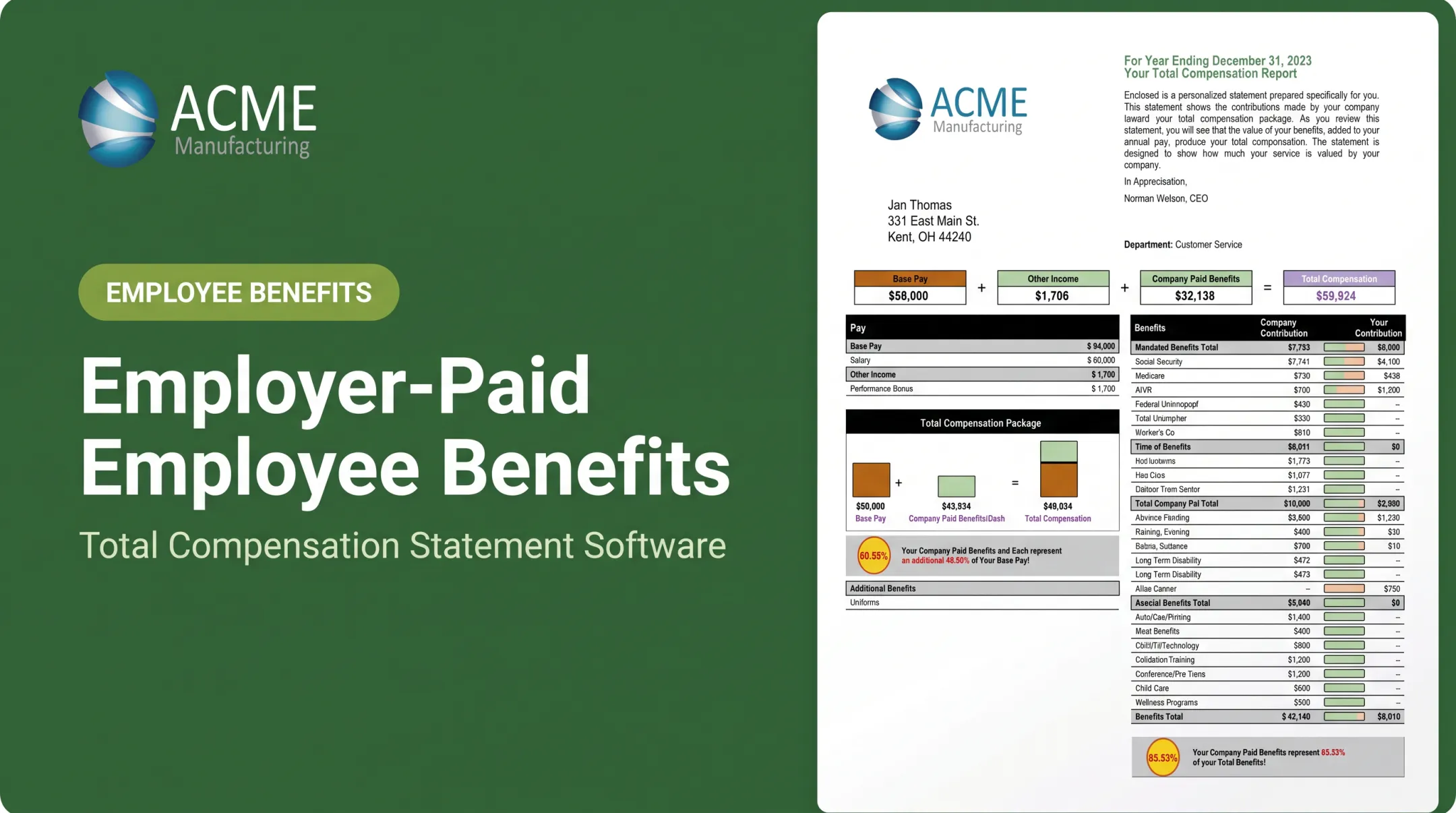
Document accrual, carryover, usage, and payout rules. In one employer example, vacation was valued at $3,231, holidays at $1,723, and sick time at $1,077.
Flexibility and wellbeing
SHRM's 2023 survey found part-time employees reported flexible work (65%), PTO (42%), and retirement planning (34%). Low-cost options include:
- Shift flexibility
- EAPs and wellness programs
- Tuition help (up to $5,250 tax-free under Section 127)
- Commuter benefits ($340 a month in 2026)
Document flexibility policies and apply them consistently.
Insurance and account-based benefits
Life, disability, FSAs, and HSAs vary by plan. 2026 limits: health FSA $3,400; HSA $4,400 self-only and $8,750 family. A general-purpose FSA generally blocks HSA contributions.

A benefit matrix can capture eligibility, waiting period, employee cost, employer contribution, accrual or vesting rules, and change-in-status procedures for each benefit.
Why Should Employers Offer Part-Time Benefits?
Recruiting and retention
SHRM's 2023 survey found 14% of part-time workers planning to leave cited limited or no benefits. That figure is 33% among those who prefer full-time work. These are reported reasons, not proof of retention ROI.
The same benefits help you recruit caregivers, students, older workers, and workers with disabilities who need flexible schedules. About 30% of employed people with disabilities usually work part-time, versus 17% of those without.
Trust and equity
KFF data shows 60% of part-time workers have an employer offering health insurance, versus 84% of full-time workers. Women make up 66% of part-time workers, so inconsistent exclusions fall unevenly and hurt morale.
Cost tradeoffs
Benefits averaged $5.05 per hour (20.0%) of part-time compensation in June 2026, versus $17.03 (31.5%) for full-time. Weigh those costs against retention, recruiting, and engagement. Start with sustainable benefits, then review participation, feedback, and workload.

How to Build and Manage a Part-Time Benefits Policy
Audit your workforce
Review the factors that shape your part-time benefits design:
- Workforce mix and variable hours
- Turnover, hiring needs, and program costs
- Plan terms and applicable jurisdictions
Have counsel review any classifications that could raise discrimination or misclassification concerns.
Define eligibility and proration
Write a rule for each benefit that covers:
- Minimum hours, measurement periods, and waiting periods
- Tenure, status changes, and rehires
- When coverage ends
Example proration: an employee scheduled for 20 hours of a 40-hour week earns 50% of the full-time PTO. With 80 annual hours at full-time, that is 40 hours. This example is illustrative, not a legal requirement.
Apply rules consistently
Keep the same rules in every place employees and managers see them:
- Handbook and offer letters
- Plan documents
- Payroll setup and benefits portal
- Manager guidance
Consistency reduces disputes and shows that similar employees are treated alike.
Track hours and status changes
Monitor the events that change eligibility:
- Variable hours and eligibility milestones
- Leave, transfers, rehires, and terminations
Reconcile timekeeping, payroll, HR, and carrier records regularly to catch missed enrollments, wrong deductions, or coverage that should have ended. Retirement eligibility errors can be corrected under IRS EPCRS.

Communicate total compensation
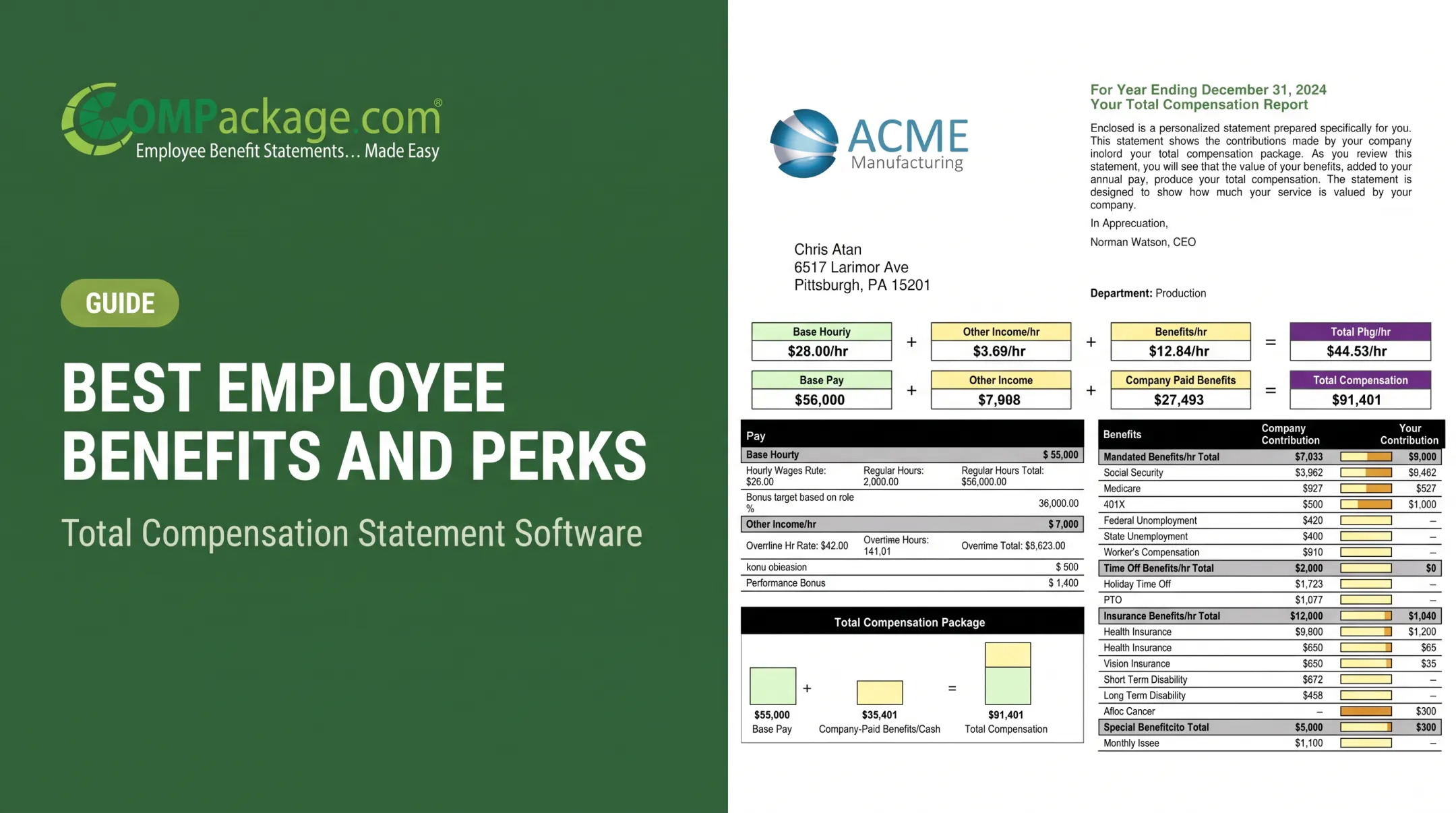
A total compensation statement shows wages, employer-paid benefits, leave, retirement contributions, and perks together. Benefits often account for 40% to 60% of total compensation, while take-home pay is only about 50% to 65%.
A self-service platform such as COMPackage lets employers build customizable reports, import employee data from Excel, show only benefits relevant to each employee, and update reports for free as details change.
Review annually
Track the signals that show whether the policy is working:
- Enrollment, participation, and utilization
- Employee questions, corrections, and program cost
- Turnover and offer acceptance
BLS quits rates give context: 2.2% for total private in 2025, but 4.2% in accommodation and food services. Review legal changes, carrier terms, and plan documents each year.
Frequently Asked Questions
Is it better to work part-time or full-time?
It depends on priorities. Part-time offers flexibility; full-time usually brings steadier income, advancement, and broader benefits access. Compare each employer's package.
What are the benefits of a part-time job?
Schedule flexibility, supplemental income, and work experience, plus sometimes PTO or retirement access. Check eligibility rules rather than assuming benefits come with the role.
What part-time job has the best benefits?
No job universally does. Compare health coverage, retirement contributions, paid leave, eligibility hours, waiting periods, employee costs, and scheduling terms.
What's the difference between part-time and casual?
Part-time usually means scheduled work below the employer's full-time standard. Casual usually means irregular or as-needed work. Definitions and benefit treatment vary by employer and jurisdiction.
Is a worker the same as an employee?
No. "Worker" is broad; "employee" is a legal category. Employee versus contractor status affects payroll taxes, benefits, wage rules, and protections.
What is the minimum number of hours for a part-time employee?
No universal minimum exists in the US. Employers, benefit plans, the ACA, and state or local laws each use different thresholds.