The difference affects take-home pay, employer labor costs, withholding duties, filings, and compliance. Mix them up and you risk wrong paychecks, late deposits, and penalties. This guide compares the two taxes by purpose, payer, calculation, and practical handling in payroll, using 2026 figures from official sources.
Key Takeaways
- Payroll taxes fund Social Security, Medicare, and unemployment programs; income tax funds broader government services.
- Employers withhold and remit income tax, but the employee owes it. FICA is shared, and FUTA is employer-only.
- Income tax withholding follows Form W-4 and brackets; payroll taxes use fixed rates and wage bases.
- Worker classification, state rules, and deadlines affect both.
Payroll Tax vs. Income Tax: Quick Comparison
The IRS groups federal income tax withholding, Social Security, Medicare, and FUTA under "employment taxes." But the categories work differently. Income tax withholding is a collection mechanism. FICA and FUTA are separate liabilities.
| Question | Payroll tax | Income tax |
|---|---|---|
| Who pays? | FICA is split between employee and employer; FUTA and most state unemployment tax are employer-only | The employee owes it; the employer withholds and remits |
| What does it fund? | Social Security, Medicare Part A, unemployment benefits | A broad range of public services |
| How is it calculated? | Fixed rates up to wage bases | W-4 inputs, filing status, progressive brackets |
| Where does it show up? | Employee share on the pay stub; employer share as a business cost | Withholding on the pay stub, reconciled on the annual return |
| Compliance | Deposits, Forms 941 and 940, wage-base tracking | Accurate W-4s, withholding tables, W-2s, state registration |
Who pays?
Employees pay 6.2% Social Security and 1.45% Medicare through withholding, and employers match both. FUTA is paid only by the employer. Most state unemployment taxes are also employer-funded, though Alaska, New Jersey, and Pennsylvania collect employee contributions too.
Income tax is different. The liability belongs to the employee. The employer calculates the withholding and sends it to the government.
What does each tax fund?
Payroll taxes go to specific programs: Social Security trust funds, Medicare Part A, and federal and state unemployment insurance. Income tax revenue, whether federal, state, or local, supports general government operations rather than one insurance program.
How is each calculated?
Payroll taxes use set rates on wages up to a limit. Income tax withholding depends on the employee's W-4 and the IRS withholding methods in Publication 15-T. Final tax is then set on the annual return.
What Is Payroll Tax?
Payroll tax generally means taxes tied to employee wages, including employee withholdings and employer-paid employment taxes. The IRS glossary lists payroll taxes as Social Security and Medicare. Federal income tax withholding runs through payroll but is technically a different thing.
The main categories
- Social Security: 6.2% employee plus 6.2% employer, on wages up to $184,500 per employee in 2026, per Publication 15.
- Medicare: 1.45% each, with no wage ceiling. Employees pay an extra 0.9% on wages above $200,000 (no employer match).
- FUTA: 6.0% on the first $7,000 per employee, employer-only. A credit of up to 5.4% usually brings it to 0.6%.
- State unemployment: Rates and wage bases vary. Washington's 2026 base is $78,200, while California's is $7,000.

Credit reduction states can pay more. California's 2026 reduction adds $105 per employee.
What the paycheck doesn't show
Employer matching and employer-only taxes are extra business costs. They never reduce net pay.
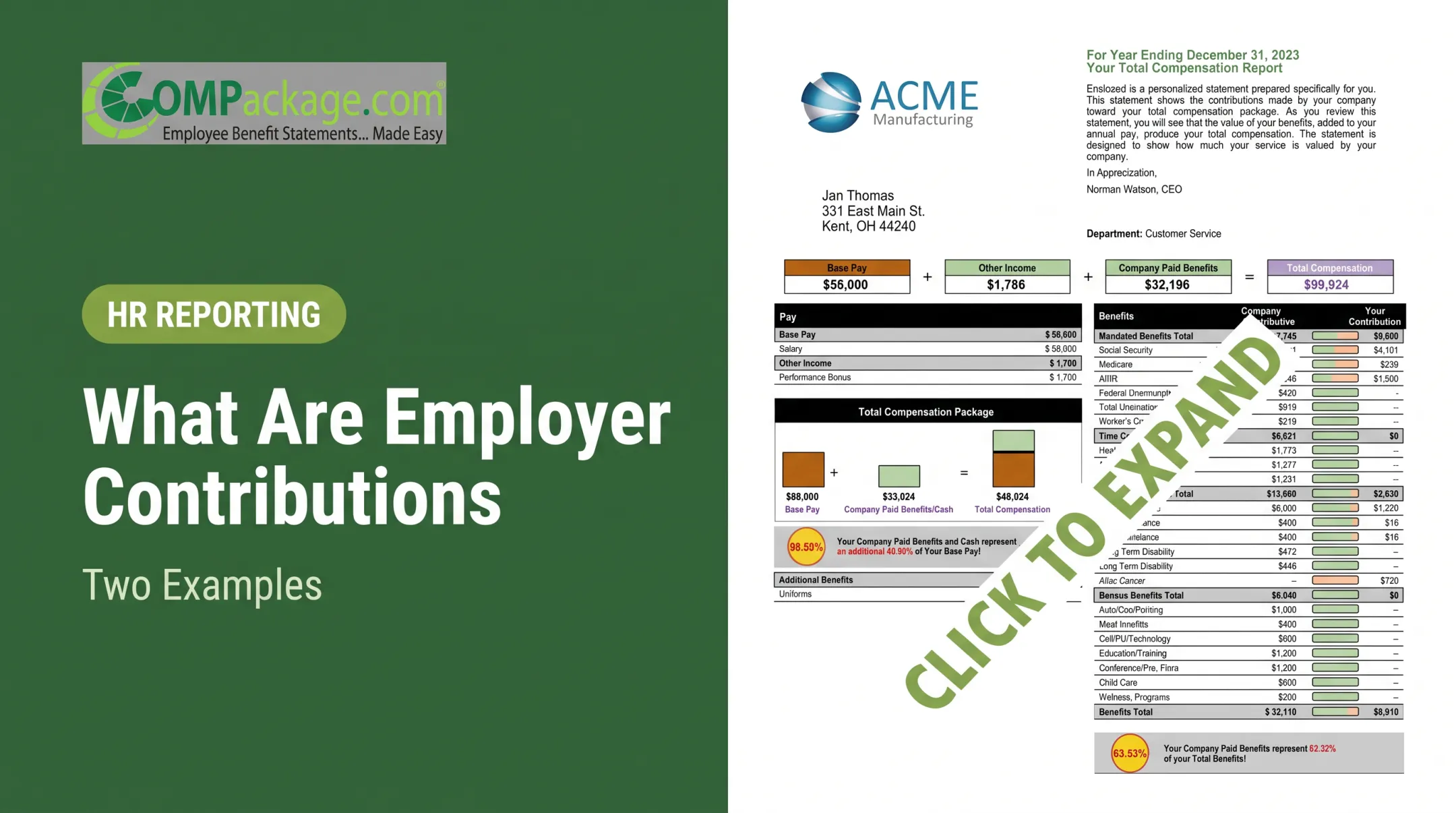
In COMPackage's sample report for a $50,000 employee, Social Security shows $4,161 from the company and $4,161 from the employee, Medicare $838 each, federal unemployment $420 (employer only), and state unemployment $406 (employer only).
Inputs for the calculation
You need gross wages, taxable compensation, pay frequency, employee status, year-to-date wages, and the current wage bases. Pull rates from IRS, SSA, and state guidance each year, since they change.
Where payroll taxes apply
- W-2 employees: Employer and employee both owe FICA.
- Self-employed people: They pay 15.3% self-employment tax (12.4% Social Security plus 2.9% Medicare), applied to 92.35% of net profit.
- Independent contractors: The business doesn't withhold, but classification depends on the IRS control test, not the label.

Accuracy matters. Late deposits draw penalties of 2% to 15%, depending on delay, according to the IRS deposit penalty schedule. Errors also mean wrong paychecks, amended filings, and audit exposure.
What Is Income Tax?
Federal, state, and sometimes local governments levy income tax on taxable income. That income includes wages and other sources. This article focuses on the payroll-tied portion.
How W-4 drives withholding
The 2026 Form W-4 collects filing status, multiple-job information, dependents and credits, other income, deductions, and extra withholding. The employer applies these with pay frequency and the Publication 15-T methods. No single universal rate exists.
Progressive brackets
Federal rates run from 10% to 37% for 2026. A higher bracket taxes only the income inside it, not every dollar. For a single filer in 2026:
| Rate | Taxable income up to |
|---|---|
| 10% | $12,400 |
| 12% | $50,400 |
| 22% | $105,700 |
| 24% | $201,775 |
| 32% | $256,225 |
| 35% | $640,600 |
| 37% | Over $640,600 |

The single standard deduction is $16,100. Married filing jointly and head of household figures differ, so check the IRS inflation adjustment release for your filing status.
How Income Tax Appears in Payroll
Withholding vs. final liability
Withholding is an estimate. At year end, the employee compares total withholding with the actual tax owed. More withheld means a refund; less means a balance due.
State and local variation
- Alaska, Florida, Nevada, New Hampshire, South Dakota, Tennessee, Texas, Washington, and Wyoming have no broad wage income tax.
- New York generally requires withholding on residents' wages and on nonresidents' wages for work performed in New York.
- Pennsylvania employers compare resident local tax rates with the workplace rate and withhold the higher one.
Verify rules where the employee works, not only where your headquarters sits.
Bonuses and other income
Supplemental wages can be withheld at an optional flat 22% (37% above $1 million annually). That's withholding, not final tax. Deductions, credits, and other income change the real bill on the return.
Payroll Tax vs. Income Tax: What Is Better?
Neither. The useful questions are which tax applies, who's responsible, and what it does to take-home pay and total labor cost.
Practical guidance by role
- Employees: Review pay-stub deductions and your W-4.
- Employers: Keep employee withholdings separate from employer liabilities.
- Self-employed workers: Plan for income tax and self-employment tax, paid through Form 1040-ES estimates.
- Businesses: Confirm classification before deciding what to withhold.
A review checklist
- Check payroll records against current tax tables.
- Confirm state registrations.
- Verify deposit schedules (monthly if lookback liability is $50,000 or less; semiweekly above that).
- Track year-to-date wage bases.
- Calendar Forms 941, 940, and W-2/W-3 (2026 W-2s are due February 1, 2027).

Multi-state or classification-sensitive cases call for a qualified tax professional.
Two scenarios
A W-2 employee. The employee's gross pay shrinks by income tax withholding and their half of FICA. The employer separately pays its FICA match, FUTA, and state unemployment. So total labor cost exceeds both gross pay and take-home pay.
IRS Publication 926 shows a household example: $3,360 in wages produced $208.32 Social Security and $48.72 Medicare from each side. It's a household case, so ordinary business payroll differs.
A 1099 contractor. The business withholds nothing. The contractor pays income tax and self-employment tax through quarterly estimates.
If the IRS finds the worker was really an employee, the business may owe employment taxes it never collected. Trust fund liability can reach responsible individuals who willfully fail to pay withheld amounts.
Taxes are one piece of pay
Taxes are only part of the picture for employees. Employers can use COMPackage to build total compensation reports showing pay, benefits, and employer-paid costs in one clear statement. It isn't payroll tax software or tax-filing support, but it helps employees see the full value behind their paycheck.
Conclusion
Payroll tax and income tax often run in the same payroll batch, but they differ in purpose, payer, calculation, and compliance. Stay compliant by keeping:
- Classifications accurate
- Tax data current
- Records complete (the IRS expects at least four years)
- Filings on time
Confirm changing requirements with official agencies or a qualified tax professional.
Frequently Asked Questions
What is the difference between withholding tax and payroll tax?
Withholding tax is money taken from an employee’s pay and remitted to tax authorities. Payroll tax is a category of employment taxes such as FICA and FUTA. Income tax withholding runs through payroll but is not an employer-paid payroll tax.
Who pays taxes, employer or employee?
Employees bear income tax and their share of FICA. Employers withhold and remit those amounts, then pay the matching FICA share and employer-only taxes such as FUTA.
What is the difference between income tax and tax payable?
Income tax is the tax imposed on taxable income. Tax payable is what remains owed after withholding, estimated payments, and credits.
What exactly is a payroll tax?
Payroll taxes are employment taxes calculated on wages. Main categories are Social Security, Medicare, and unemployment taxes. Obligations vary by worker type, state, and locality.
What is federal income tax?
Federal income tax is the U.S. government’s tax on taxable income, using progressive brackets. It is commonly withheld from pay based on Form W-4.
What are the tax brackets for 2026?
Rates run from 10% to 37%, with thresholds that vary by filing status. See the IRS federal tax rates page and Revenue Procedure 2025-32 for the official tables.