Introduction
The number on a paycheck is only part of what an employer pays for an employee. Employers also put money toward retirement accounts, health premiums, insurance and more. Much of it never touches a pay stub.
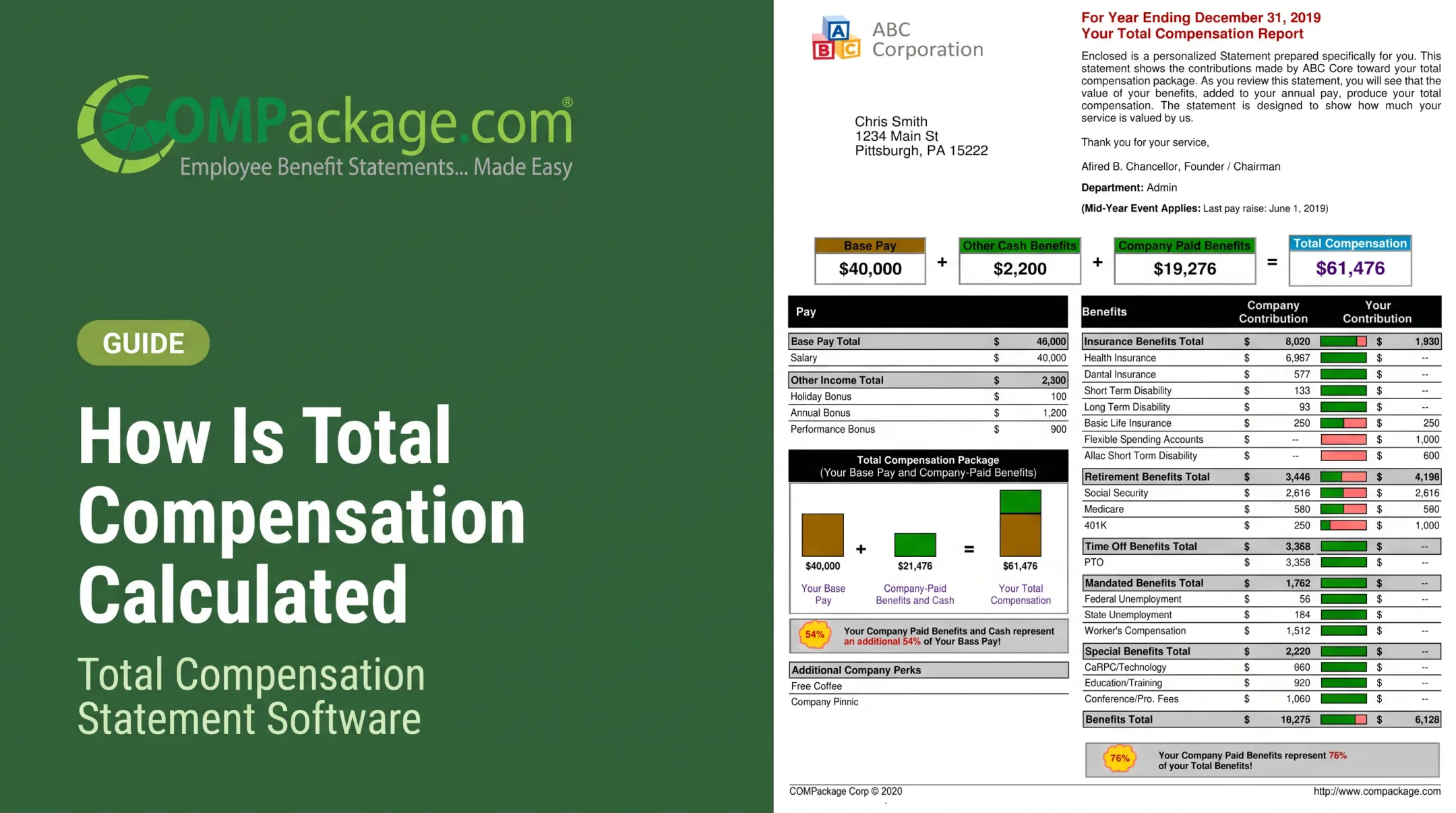
The gap matters. COMPackage's sample report puts company-paid benefits and cash at an additional 60.58% of base pay, and the after-tax amount on a paycheck at only about 50% to 65% of total compensation.
This article defines employer contributions, separates them from employee contributions, and walks through two hypothetical examples: a retirement match and a health-insurance premium share. Eligibility, tax, vesting and contribution rules vary by plan and by US law.
Key Takeaways
- An employer contribution is money or value an employer provides toward an employee benefit.
- Contributions can be percentage-based, fixed-dollar, matching or nonelective.
- Payroll deductions are employee money, not employer contributions.
- Check plan documents and pay statements to see the full value.
What Is an Employer Contribution?
An employer contribution is an employer-funded payment toward an employee's benefit, account, premium or other compensation-related program. It sits on top of wages.
Employer contributions versus employee contributions
An employer contribution comes from the employer. An employee contribution is generally withheld from wages or elected by the employee. A payroll deduction is not automatically employer-funded.
Two retirement structures show the difference:
- Employer match: depends on the employee contributing, such as deferring part of their pay.
- Nonelective contribution: goes to eligible employees whether or not they contribute. The IRS describes safe harbor 401(k) options built both ways.
How employer contributions are calculated
Most contributions follow one of three structures:
- A percentage of pay or premium
- A fixed dollar amount
- A formula tied to participation or another eligibility condition
A few terms come up repeatedly:
- Contribution rate: the percentage or amount the employer pays.
- Matching limit: the most pay the employer will match.
- Eligible compensation: the pay definition the plan uses. It may include commissions or exclude them.
- Eligibility date: when you first qualify.
- Vesting schedule: how long you must stay before employer money is fully yours.
What employees should check
- Who qualifies, and when contributions begin
- Whether the money vests over time
- Whether it is taxable
- How it can be used
- Whether annual or plan limits apply
The plan document, benefits summary, payroll records or HR team hold the controlling details. For tax and retirement questions, check current IRS or Department of Labor guidance.
Two Examples of Employer Contributions
Both examples are hypothetical. The figures are illustrative, not industry standards.
Example 1: Employer matching contribution to a retirement account
Assume an employee earns $60,000 a year. The plan matches 50 cents per dollar on the first 6% of pay.
- Employee contribution: 6% of $60,000 = $3,600
- Employer match: 50% of $3,600 = $1,800
- Combined deposit: $5,400
If the employee contributes only 3% ($1,800), the match is $900, and $900 of potential match goes unclaimed. If they contribute 10%, the match still stops at $1,800.
This is not a universal 401(k) formula. Plans differ, so verify against your plan document and IRS guidance.
Vanguard's 2026 report found 50 cents per dollar on the first 6% is the most common single formula, used by 12% of matching plans. It also puts the average promised match at 4.7% of pay. That figure is a promise, not what employees actually receive.

Example 2: Employer contribution toward a health-insurance premium
Assume a plan with a $10,800 annual premium for single coverage. Here are two ways the employer might fund it:
| Structure | Employer pays | Employee pays |
|---|---|---|
| Fixed dollar | $9,600 | $1,200 |
| 90% of premium | $9,720 | $1,080 |
Now the premium rises 10% to $11,880. Under the fixed approach the employer still pays $9,600, so the employee covers $2,280. Under the 90% approach the employer pays $10,692 and the employee pays $1,188.
A fixed amount makes the employer's budget predictable. A percentage tracks the premium, so employer cost moves with it.

KFF's 2026 survey reports average worker contributions of $1,672 for single coverage and $7,471 for family coverage.
What these examples demonstrate
Both are employer contributions, though one funds a retirement account and the other lowers the cost of coverage. The rules differ by benefit. Tax treatment, eligibility, vesting and permitted use are not the same for a 401(k) match as for a premium subsidy.
Common Types of Employer Contributions
Retirement
- Employer matches on employee deferrals
- Nonelective contributions paid whether or not employees defer
- Discretionary profit-sharing contributions
- Funding under other plan designs, such as SIMPLE IRAs and SEPs
Health-related
- Premium payments toward medical, dental or vision coverage
- Employer funding of HSAs (portable employee accounts with annual limits)
- Employer funding of HRAs (employer-funded arrangements)
HSAs and HRAs follow different tax and plan rules. Confirm the details with your plan administrator.
Other employer-funded value
- Life and disability insurance
- Education assistance
- Transportation and parking benefits
- Wellness programs
Not every benefit is classified or taxed the same way. Group-term life coverage above a threshold, for instance, can create taxable income, while many health premiums are generally excluded from wages.
Why Employers Should Explain Contributions as Total Compensation
Employees tend to fix on base pay and overlook what the employer pays on top. That makes it hard to judge an offer or a current package. EBRI research found only about 54% of workers report high understanding of health insurance and 53% of retirement benefits.
A practical communication checklist
- Identify the benefit by name so employees know what is covered.
- State the employer-paid amount or formula in plain dollars or percentages.
- Separate it from the employee-paid amount so the cost split is clear.
- Show the annualized value where it helps, especially for monthly premiums.
- Explain eligibility, vesting, taxability and conditions for change.
Where COMPackage fits
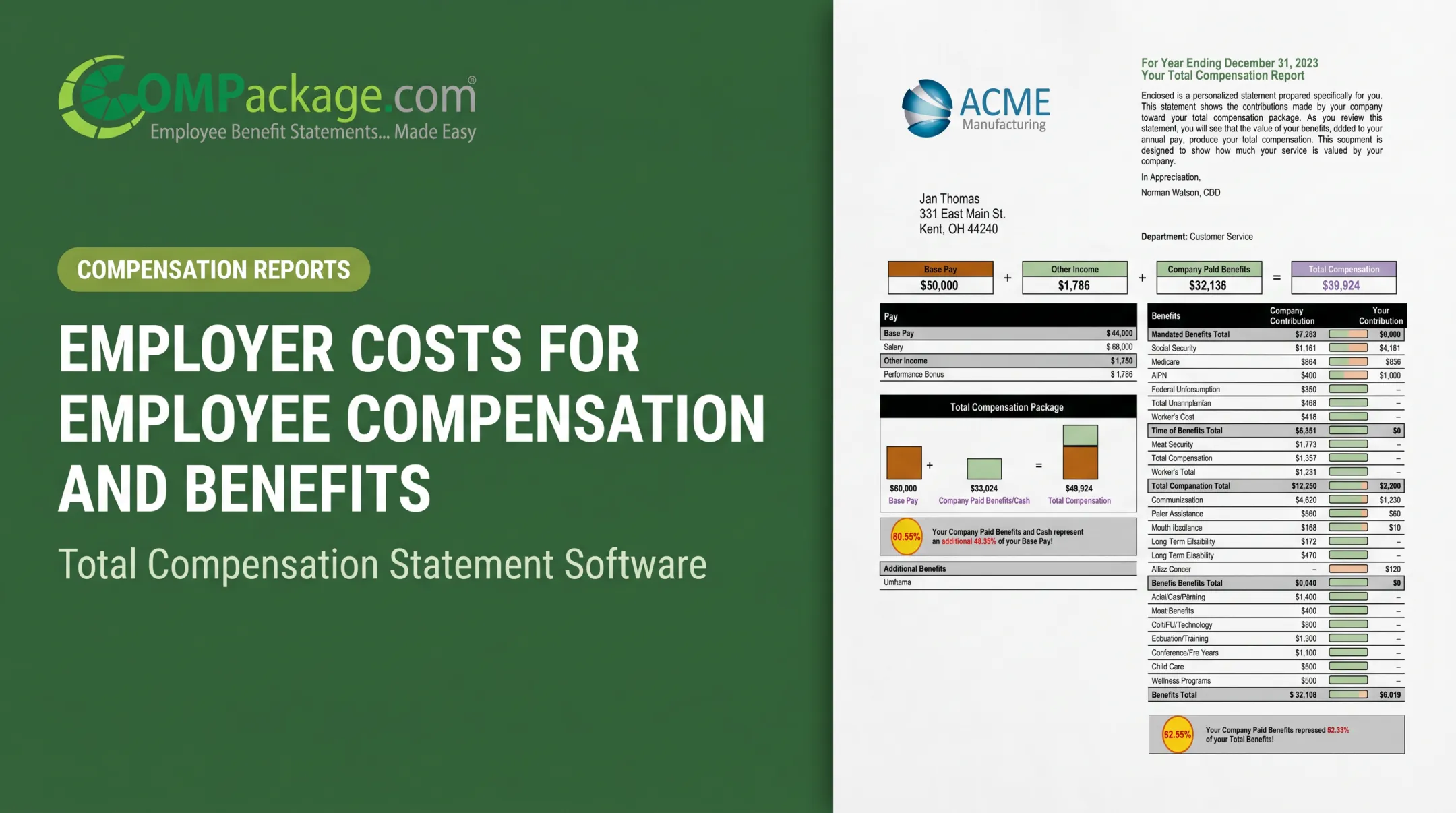
COMPackage is a self-service total compensation report tool. In its sample report, direct pay of $63,408 plus a $30,724 company benefits contribution and $8,149 in employee contributions gives a total compensation value of $102,281.

Each report shows only the benefits that apply to that employee, so check reports for accuracy before sharing.
Update the information when plans, premiums, elections or policies change. A total compensation report improves transparency, but it does not replace official plan documents, payroll records or professional tax and legal advice.
Frequently Asked Questions
How much does an employer contribute?
There is no universal amount. It depends on the benefit, employer policy, eligibility, pay, the formula and applicable plan or legal requirements. Your plan documents or benefits summary have the specifics.
What is an employer contribution?
It is money or value an employer provides toward an employee benefit, account, premium or other compensation-related program. It is separate from the employee's own contribution.
What are some examples of employer contributions?
Examples include retirement-plan matches, health-insurance premium payments, HSA or HRA funding and employer-paid insurance. Rules vary by benefit.
Are employer contributions taxable to employees?
It depends on the contribution type and on federal and state rules. Traditional retirement contributions are generally tax-deferred, while many health benefits are excluded from wages. Confirm with current IRS guidance or a tax professional.
Are employers required to make contributions?
Some contributions are voluntary. Others may be required by a plan document, employment agreement, collective bargaining agreement, law or chosen plan design, such as a safe harbor 401(k). Not every employer must contribute.