Introduction
Payroll tax shapes two numbers at once: what an employee takes home and what an employer actually pays to employ that person. They are rarely the same figure, and confusing them leads to budgeting surprises and filing errors.
This guide focuses on the US. It separates employee withholding, employer-paid employment taxes, and federal income tax withholding. The rates and limits below reflect the 2026 tax year. Confirm them each year, along with your state and local rules, before running payroll.
Key Takeaways
- "Payroll tax" can mean just Social Security and Medicare, or all employment-related taxes.
- Some taxes come out of the employee's wages; others are paid only by the employer.
- Taxable wages, W-4 data, pay frequency, wage caps, and state rules drive the math.
- Employers must calculate, deposit, report, and document everything on time.
What Is Payroll Tax?
Payroll tax is a tax on wages, salaries, tips, bonuses, commissions, and taxable fringe benefits paid for work. Employers calculate it, withhold the employee's portion, and send it to the government.
Payroll tax vs. income tax
The two are easy to blur on a pay stub, but they work differently:
- FICA funds Social Security and Medicare. It uses fixed rates, split between employee and employer.
- Federal income tax withholding depends on the employee's Form W-4 and supports general government spending.
- Employer-only taxes, such as unemployment taxes, never appear as an employee deduction (with a few state exceptions).
So the amount withheld from a paycheck is not the employer's full payroll tax cost. The employer owes its own FICA share and unemployment taxes on top of the wages.
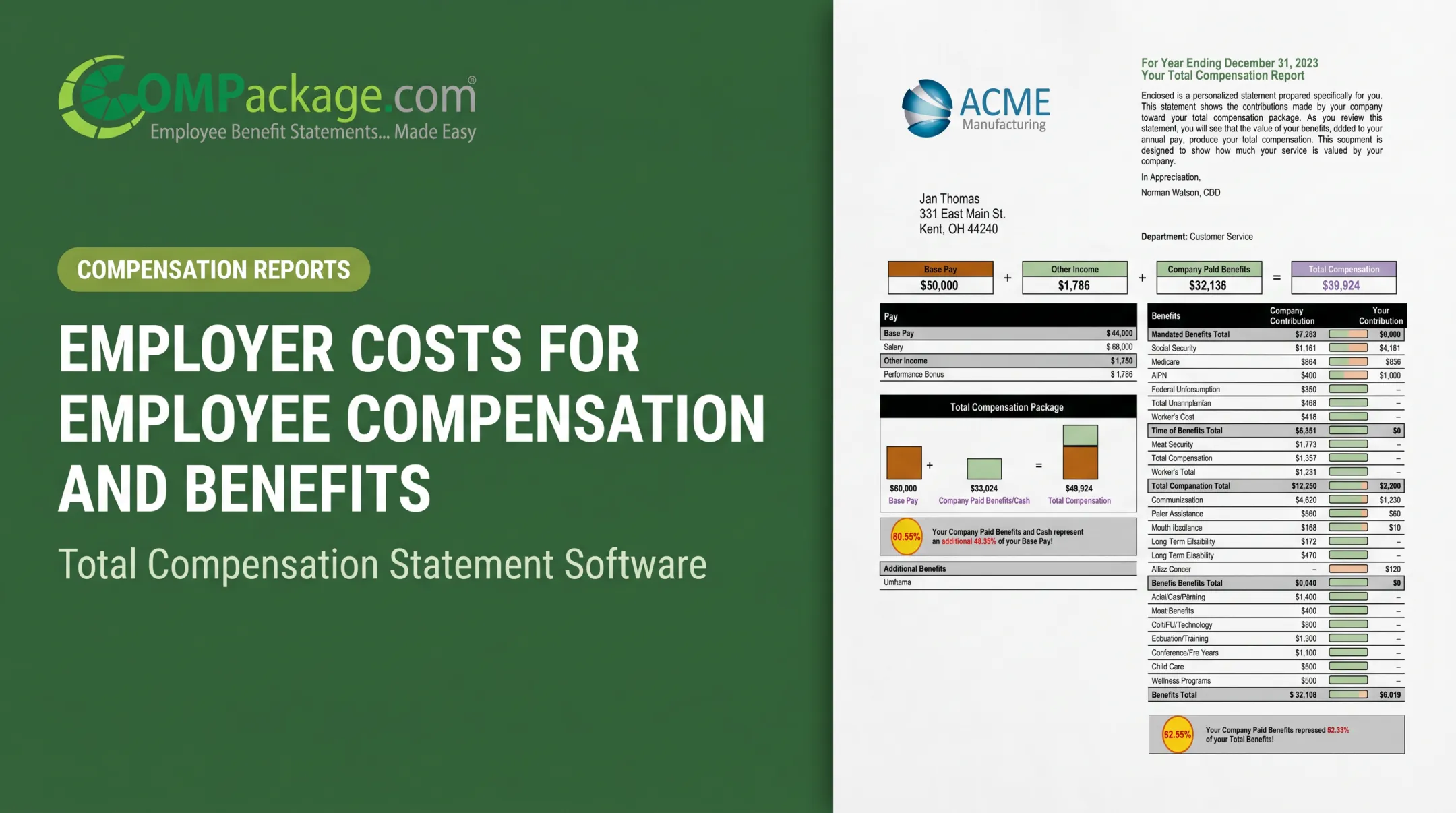
On one sample total compensation statement, legally required benefits were 7.7% of total compensation, a reminder that these costs add up beyond the paycheck.
Types of Payroll Taxes in the US
Employee and employer FICA taxes
Under IRS Topic 751, the 2026 rates are:
| Tax | Employee | Employer | Limit |
|---|---|---|---|
| Social Security | 6.2% | 6.2% | First $184,500 of wages |
| Medicare | 1.45% | 1.45% | No wage cap |
| Additional Medicare | 0.9% | No match | Wages above $200,000 |
Employers begin withholding Additional Medicare Tax in the pay period when an employee's wages cross $200,000, regardless of filing status.
Federal and state unemployment taxes
FUTA is paid only by the employer. The rate is 6.0% on the first $7,000 per employee. A credit of up to 5.4% for timely state unemployment payments usually brings the net rate to 0.6%.
States with outstanding federal loans face credit reductions. California's 2026 reduction, for example, is 1.5 points.
SUTA is run by each state. Rates and wage bases vary, and most states charge employers only. Alaska, New Jersey, and Pennsylvania also require employee contributions. Check your state workforce agency for your assigned rate.
Other paycheck withholdings
Federal, state, and local income tax withholding sits beside FICA on a pay stub but follows separate rules. Voluntary deductions are treated differently by tax type:
| Deduction | Income tax | Social Security/Medicare | FUTA |
|---|---|---|---|
| Traditional 401(k) deferral | Excluded | Taxable | Taxable |
| Roth 401(k) deferral | Taxable | Taxable | Taxable |
| Qualified health premium (Section 125) | Excluded | Excluded | Excluded |
| Health FSA (2026 limit $3,400) | Excluded | Excluded | Excluded |
"Pre-tax" is therefore tax-specific. Never subtract every deduction automatically.
How Is Payroll Tax Calculated?
Step 1: Identify the correct payroll inputs
Start with gross pay for the period: wages, tips, bonuses, and taxable fringe benefits. Then note pay frequency, worker classification, work location, and the state and local jurisdictions involved.
Next, check how each deduction affects each tax, using the table above. Tips of $20 or more per month are subject to withholding, Social Security, Medicare, and FUTA.
Step 2: Calculate FICA
- Social Security: 6.2% each for employee and employer, until wages reach $184,500.
- Medicare: 1.45% each on all wages, plus the employee-only 0.9% above $200,000.
Step 3: Calculate federal income tax withholding
There is no flat percentage here. Withholding uses the employee's Form W-4: filing status, the multiple-jobs checkbox, credits, other income, deductions, and any extra withholding per pay period.
IRS Publication 15-T offers two approaches:
- Wage bracket method: lookup tables for manual payroll, generally for annual wages under $100,000.
- Percentage method: works for any wage amount and underlies most payroll software.
Bonuses are special. Separately identified supplemental wages can use an optional flat 22% (37% on amounts over $1 million a year). In Publication 15's example, a $1,000 bonus produced $220 under the 22% method versus $114 under aggregate withholding.

Step 4: Calculate employer-only taxes
- FUTA: wages up to $7,000 × the applicable net rate (0.6% in most cases).
- SUTA: wages up to the state wage base × your assigned state rate.
These come from the employer's funds, not the employee's pay.
Step 5: A worked example
This example is educational. Assumptions: one employee paid $2,000 biweekly, well below every wage cap, no pre-tax deductions, early in the year, FUTA at 0.6%, and a hypothetical state rate of 2.5% on a $9,000 wage base.
| Item | Amount |
|---|---|
| Gross wages | $2,000.00 |
| Employee Social Security (6.2%) | $124.00 |
| Employee Medicare (1.45%) | $29.00 |
| Federal income tax withholding (W-4 based; Publication 15 example for Single, Steps 2-4 blank) | $65.00 |
| Estimated net pay (before state/local tax) | $1,782.00 |
| Employer Social Security | $124.00 |
| Employer Medicare | $29.00 |
| FUTA (0.6%) | $12.00 |
| State unemployment (assumed 2.5%) | $50.00 |
| Total employer cost for the period | $2,215.00 |

The employer cost is $2,000 in wages plus $215 in employer taxes. The employee's net pay is a separate figure. Verify all rates against current federal, state, and local rules.
Employer Payroll Tax Responsibilities and Deadlines
Before running payroll
- Get an Employer Identification Number.
- Register for state payroll and unemployment accounts. Delaware, for example, uses Form UC-1.
- Classify workers correctly and collect Form W-4 from each employee.
- Report new hires to the state within 20 days (some states require sooner).
- Set a routine for gathering hours, pay changes, taxable benefits, deductions, and updated withholding forms before each run.
During each payroll period
- Calculate taxable wages and withhold employee taxes
- Add employer contributions and issue accurate pay stubs
- Reconcile the payroll register to the general ledger
Deposits, forms, and year-end reporting
Deposits and returns follow different calendars. Quarterly filing does not mean quarterly deposits.
| Item | Rule |
|---|---|
| Form 941 | Quarterly: April 30, July 31, October 31, January 31 |
| Form 940 | Annual FUTA return: January 31 (February 10 if deposits were timely) |
| W-2/W-3 | 2026 forms due to employees and SSA by February 1, 2027 |
| Monthly depositors | 15th of the following month |
| Semiweekly depositors | Following Wednesday or Friday, depending on payday |
| $100,000 or more | Next-business-day deposit |

The 2026 lookback period for Form 941 is July 1, 2024 through June 30, 2025. Liability of $50,000 or less means monthly deposits; more means semiweekly.
Make deposits electronically through EFTPS, IRS Direct Pay, or your IRS business tax account. Dates shift to the next business day for weekends and holidays.
Penalties for late deposits run from 2% to 15%. The Trust Fund Recovery Penalty can make responsible individuals personally liable for 100% of unpaid trust-fund taxes.
Records and corrections
Keep payroll registers, deposit confirmations, filed returns, Forms W-4, wage and benefit records, and correction documents for at least four years. Reconcile regularly and fix errors promptly. Doing so limits underpayments, penalties, notices, and employee confusion.
Communicating the full value of compensation
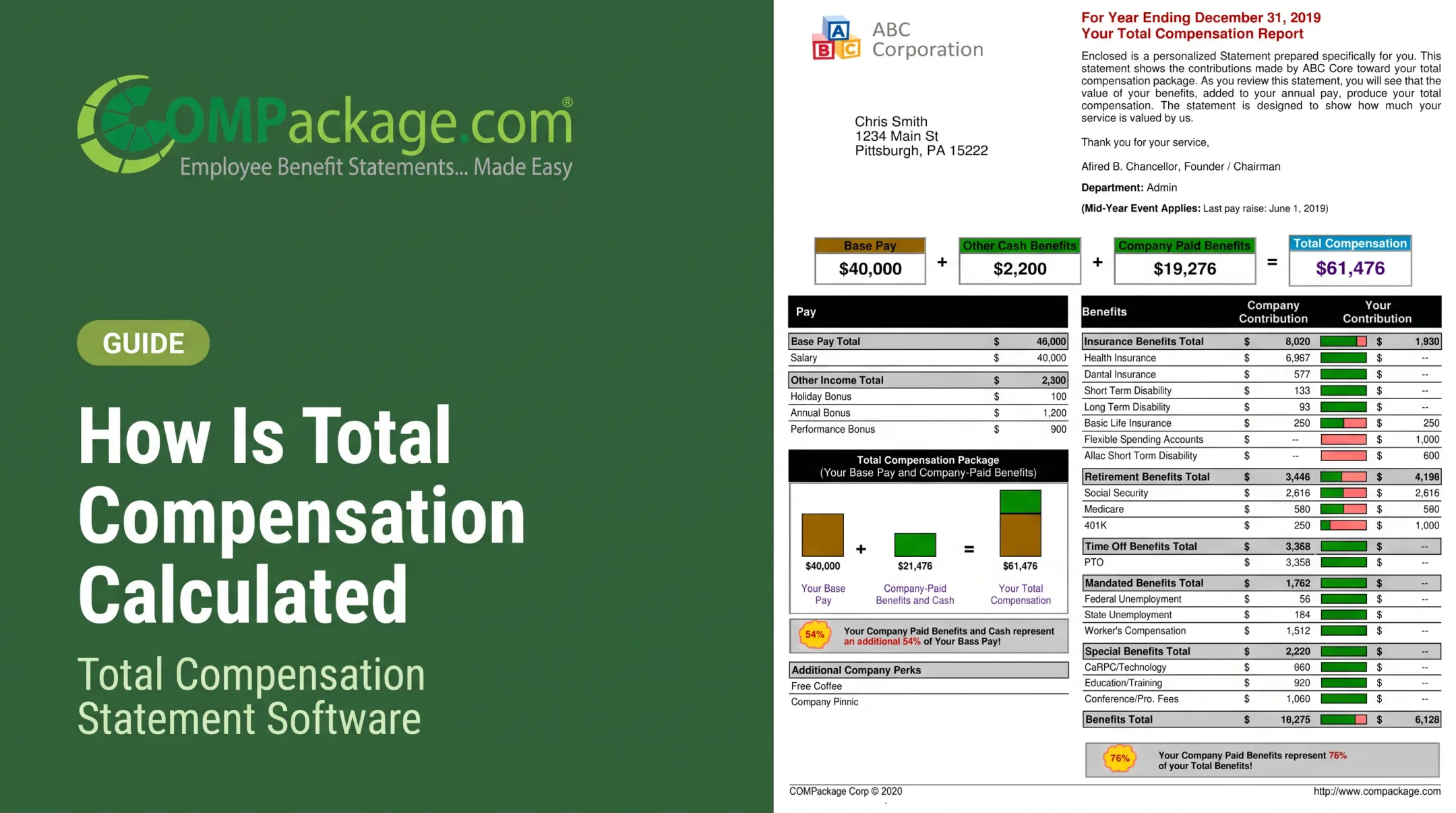
Withholding is only one part of what an employee receives. A total compensation report can show employer-paid benefits and non-wage items alongside pay. Employer-paid taxes, such as the employer share of Social Security and Medicare, can appear there too.
COMPackage offers customizable total compensation reports for this purpose. It is optional and does not replace payroll tax calculation, tax filing, or professional tax advice.
Special Cases and Common Mistakes
Self-employed workers and independent contractors
Self-employed people pay both halves of FICA through self-employment tax: 15.3% (12.4% Social Security plus 2.9% Medicare). It is figured on 92.35% of net profit using Schedule SE. Half of the tax is deductible in figuring adjusted gross income. They typically also pay estimated income tax quarterly (April 15, June 15, September 15, and January 15).

The IRS weighs behavioral control, financial control, and the type of relationship to separate contractors from employees. Misclassification can result in back taxes, penalties, and missed reporting. Section 530 relief and the Voluntary Classification Settlement Program exist, but neither is a status ruling.
Common payroll tax mistakes
- Using outdated rates or wage bases
- Applying the wrong state or local rules
- Ignoring updated Forms W-4
- Misclassifying workers
- Overlooking taxable benefits, such as personal use of a company vehicle
- Paying with a return when a deposit was required, or missing deadlines
For complex situations, rely on current IRS and state guidance, a qualified tax professional, or well-maintained payroll software.
This article is general information, not tax, legal, or accounting advice. Consult a qualified professional about your situation.
Frequently Asked Questions
How is payroll tax calculated?
Start with taxable wages, then apply Social Security, Medicare, unemployment, and income-withholding rules. Employee and employer obligations are calculated separately.
How much federal tax is deducted from my paycheck?
It depends on taxable pay, pay frequency, Form W-4 details, credits, and any extra withholding you requested. FICA taxes are separate deductions.
What is the difference between payroll tax and income tax?
FICA and other employment taxes fund specific programs at set rates. Federal income tax withholding varies with your W-4 and funds general government spending.
Who pays payroll taxes?
Employees and employers split Social Security and Medicare, though Additional Medicare is employee-only. Unemployment taxes are generally employer-paid, and self-employed people pay both FICA halves.
What payroll taxes do employers pay?
Employers pay their FICA share, FUTA, and state unemployment tax. Some states and localities add other employer obligations.